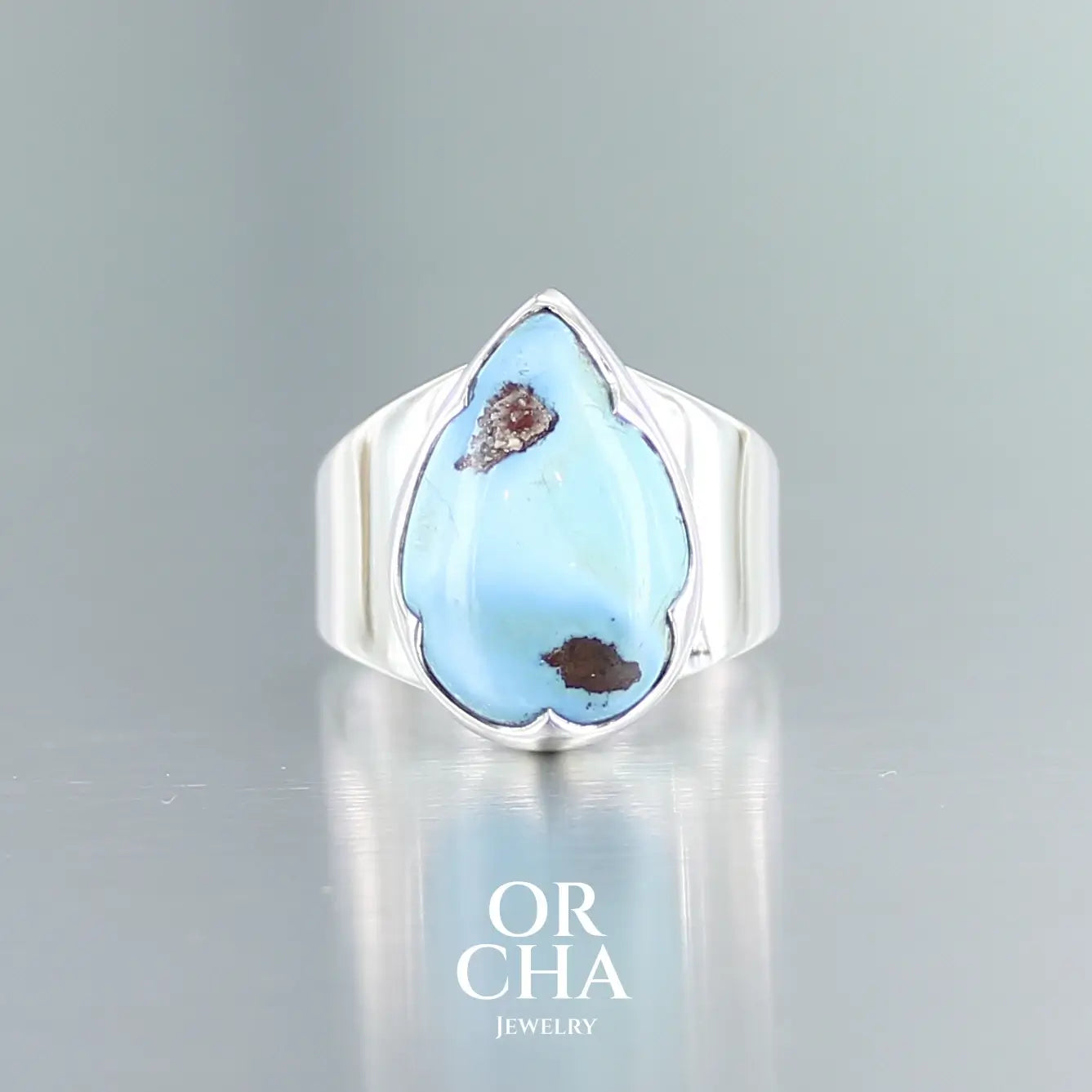
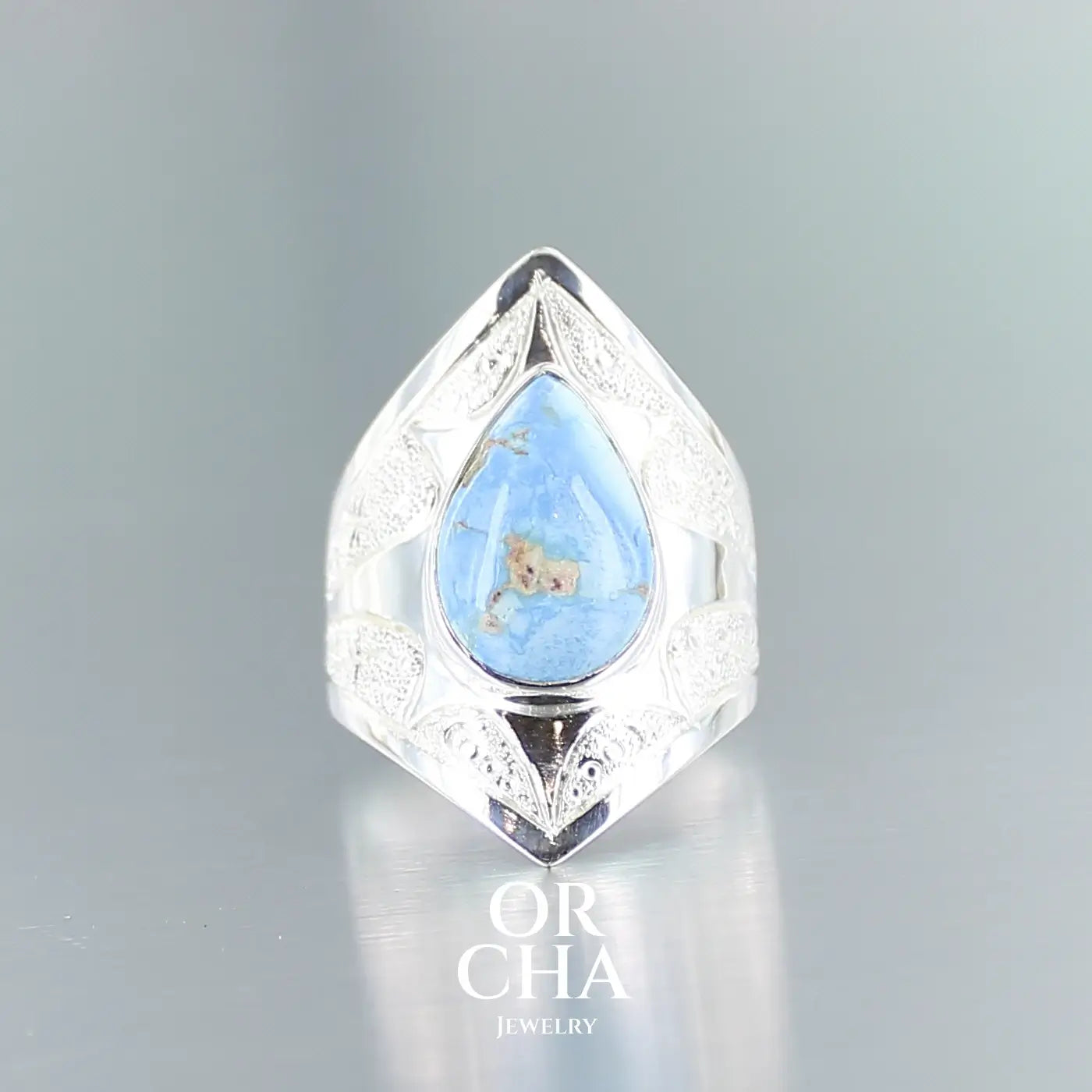
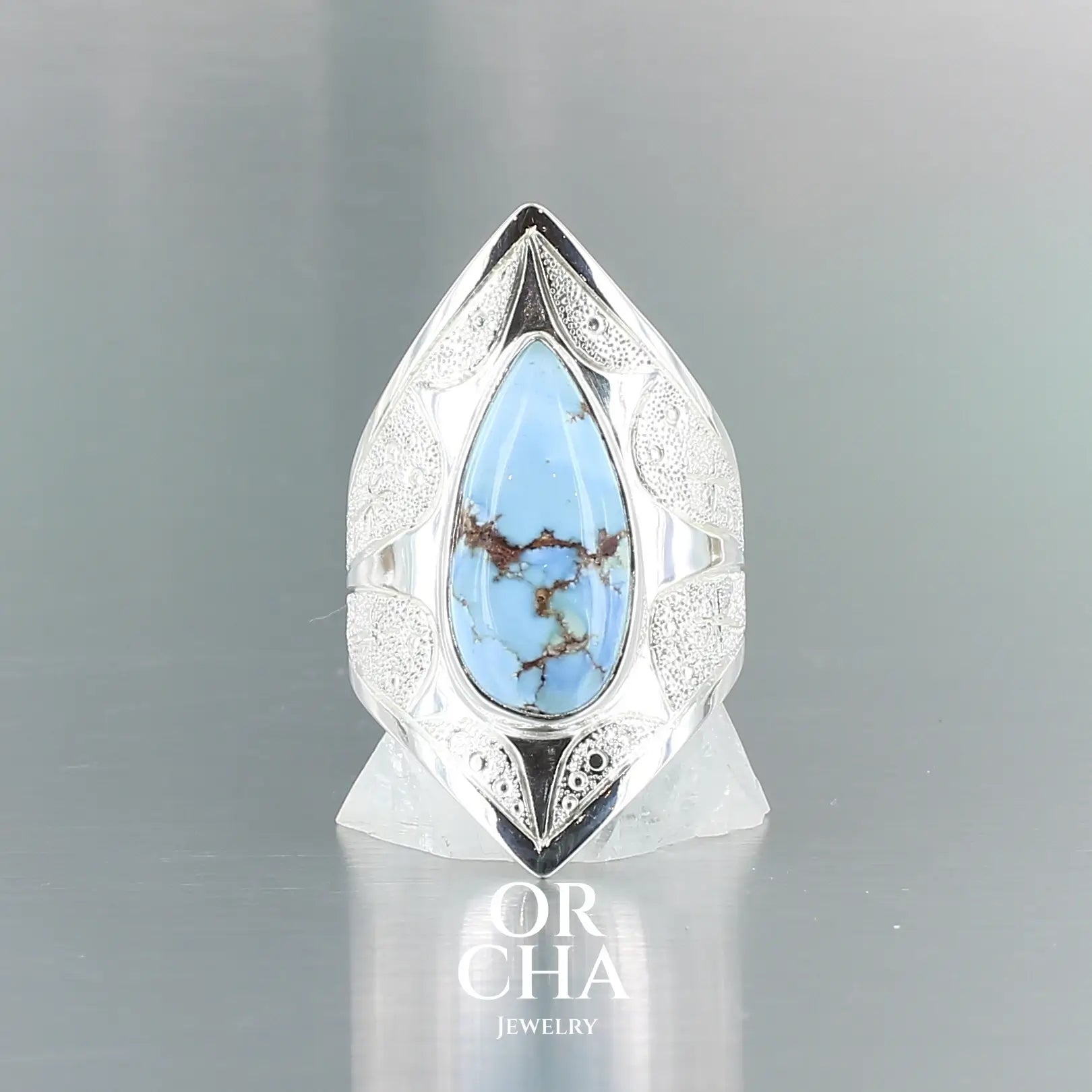
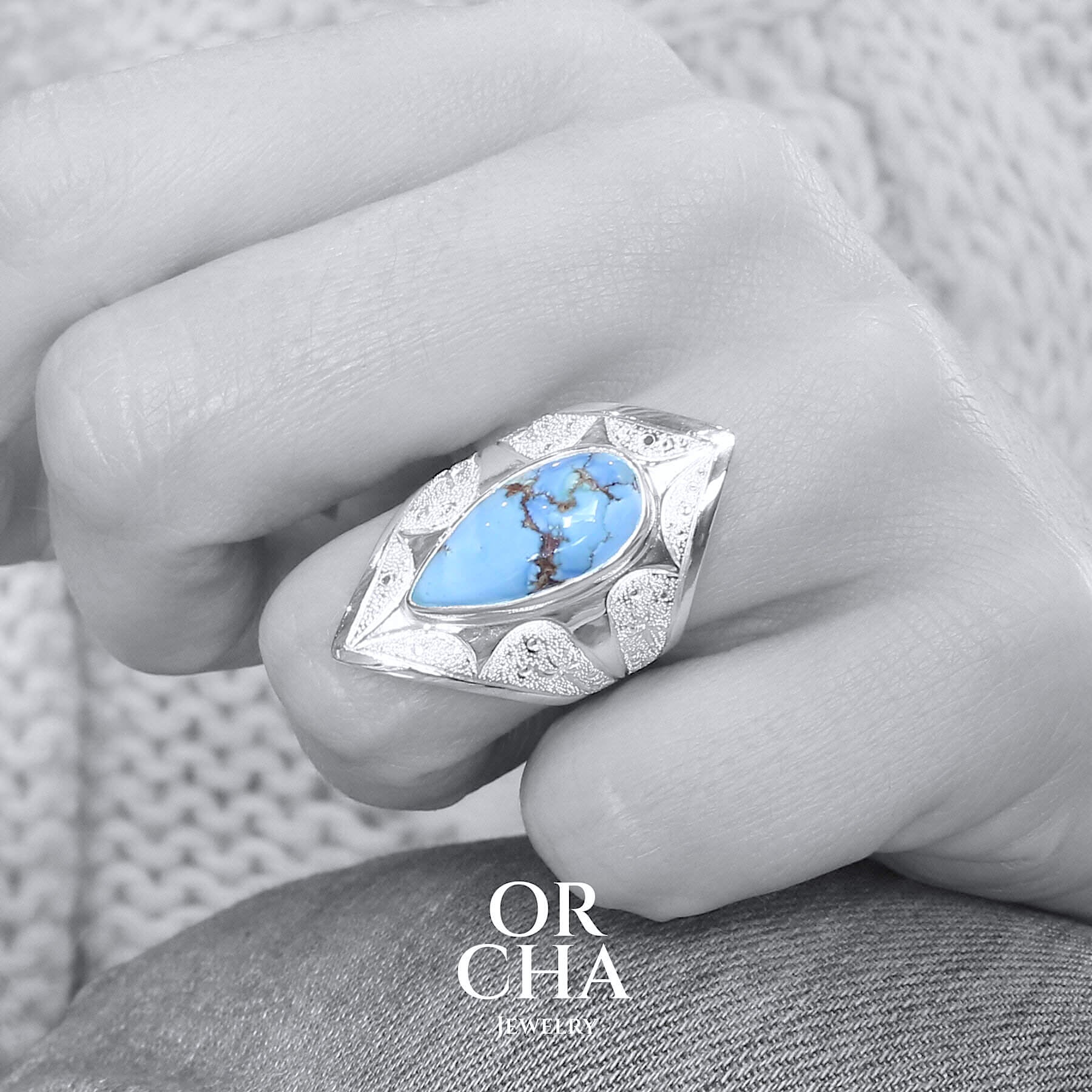
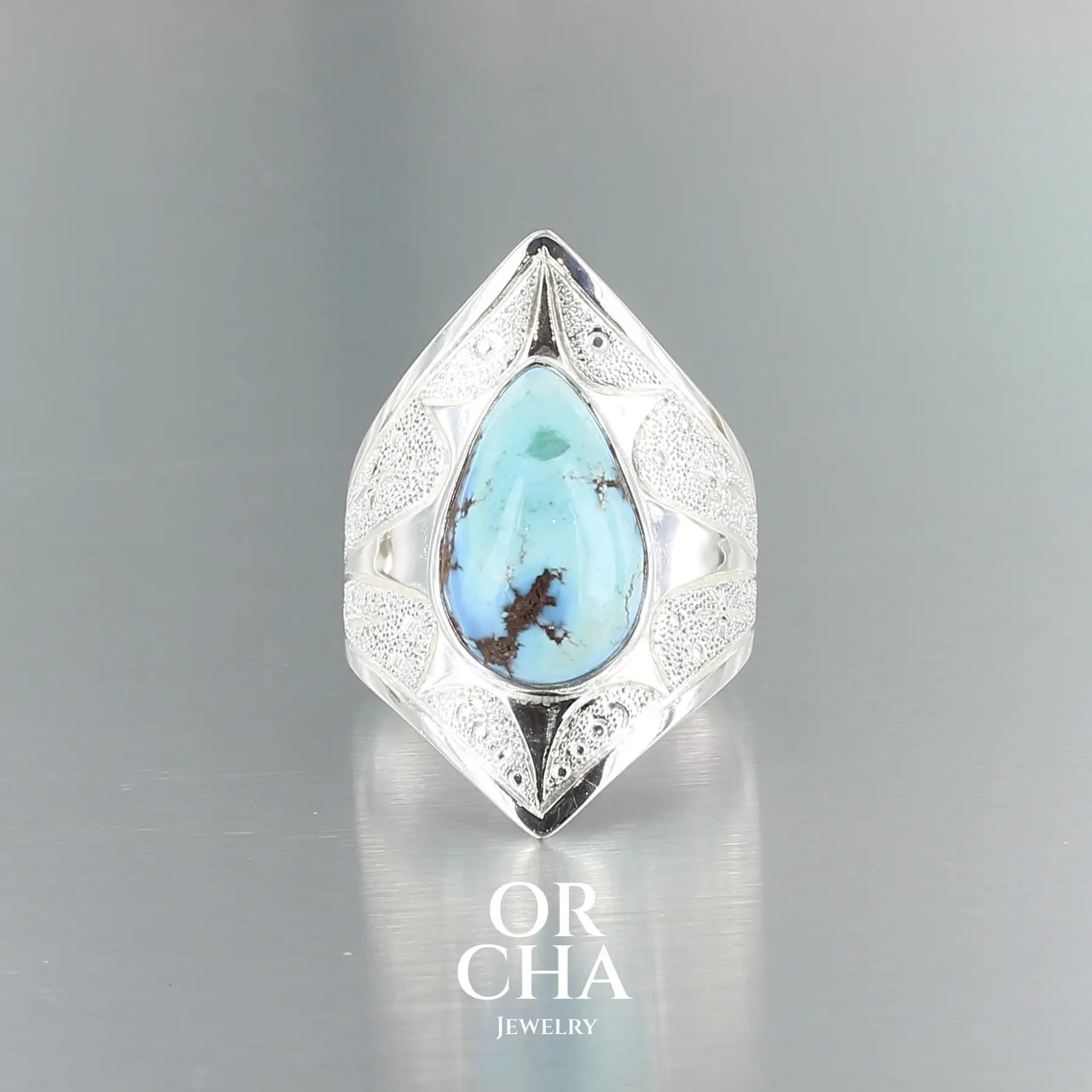
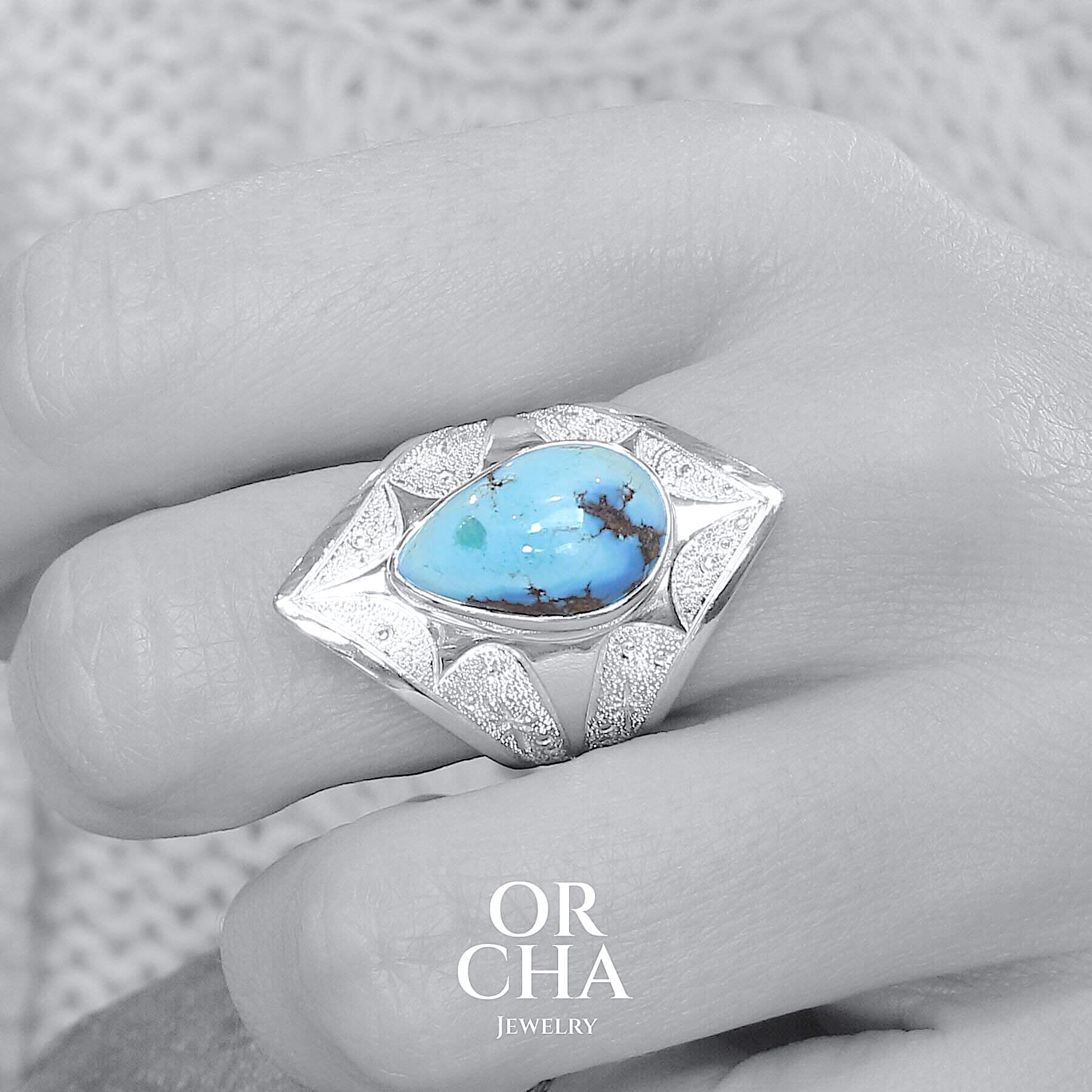
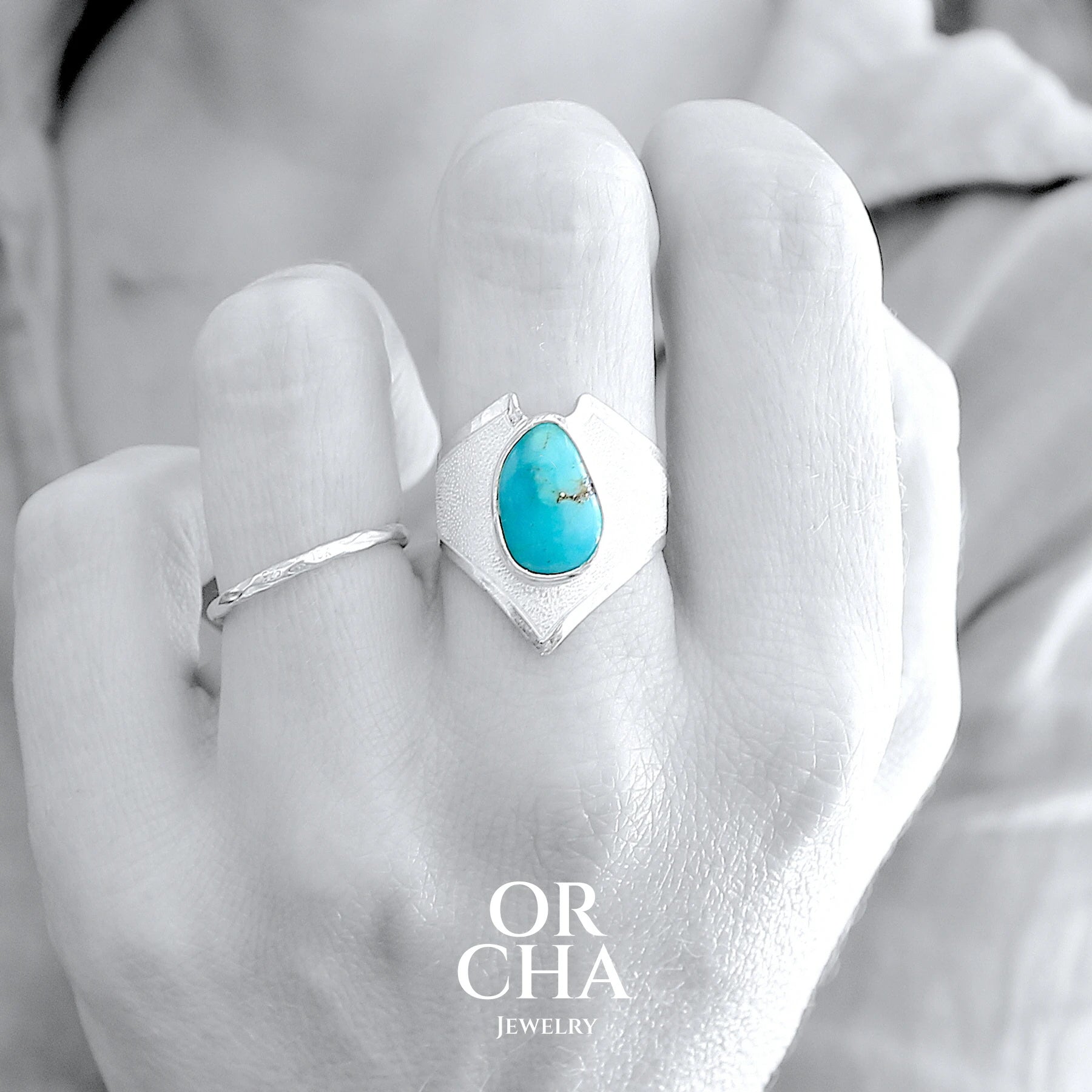
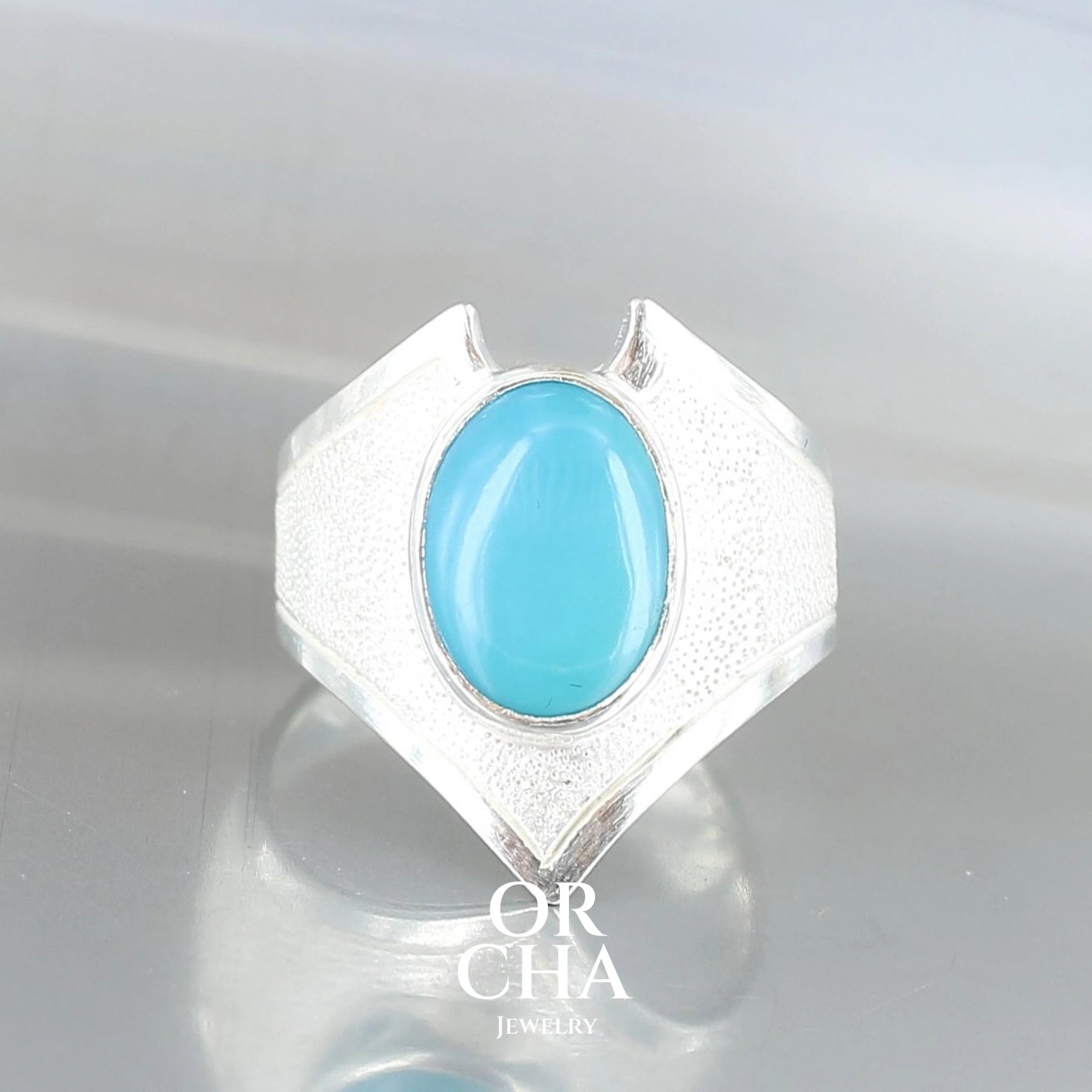
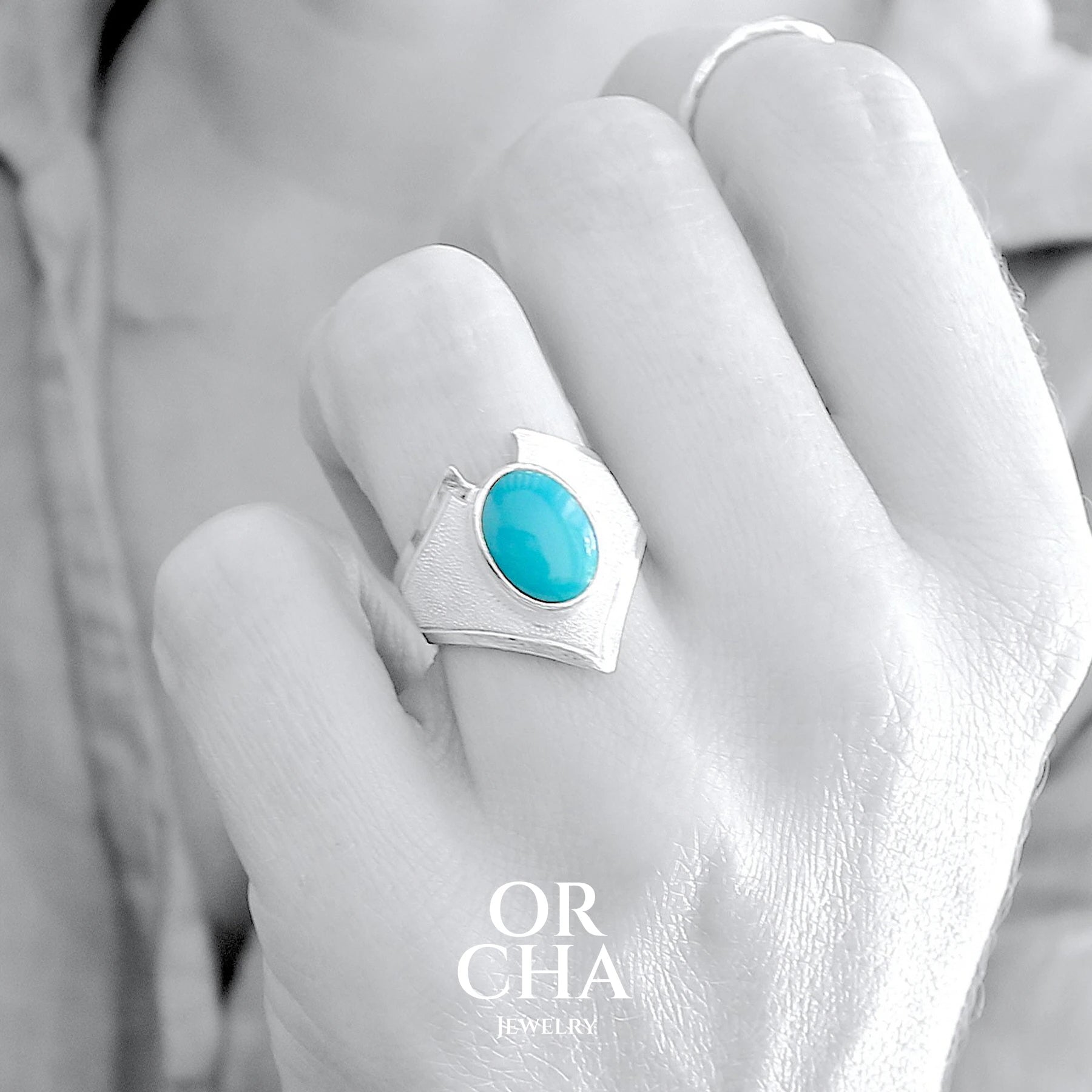
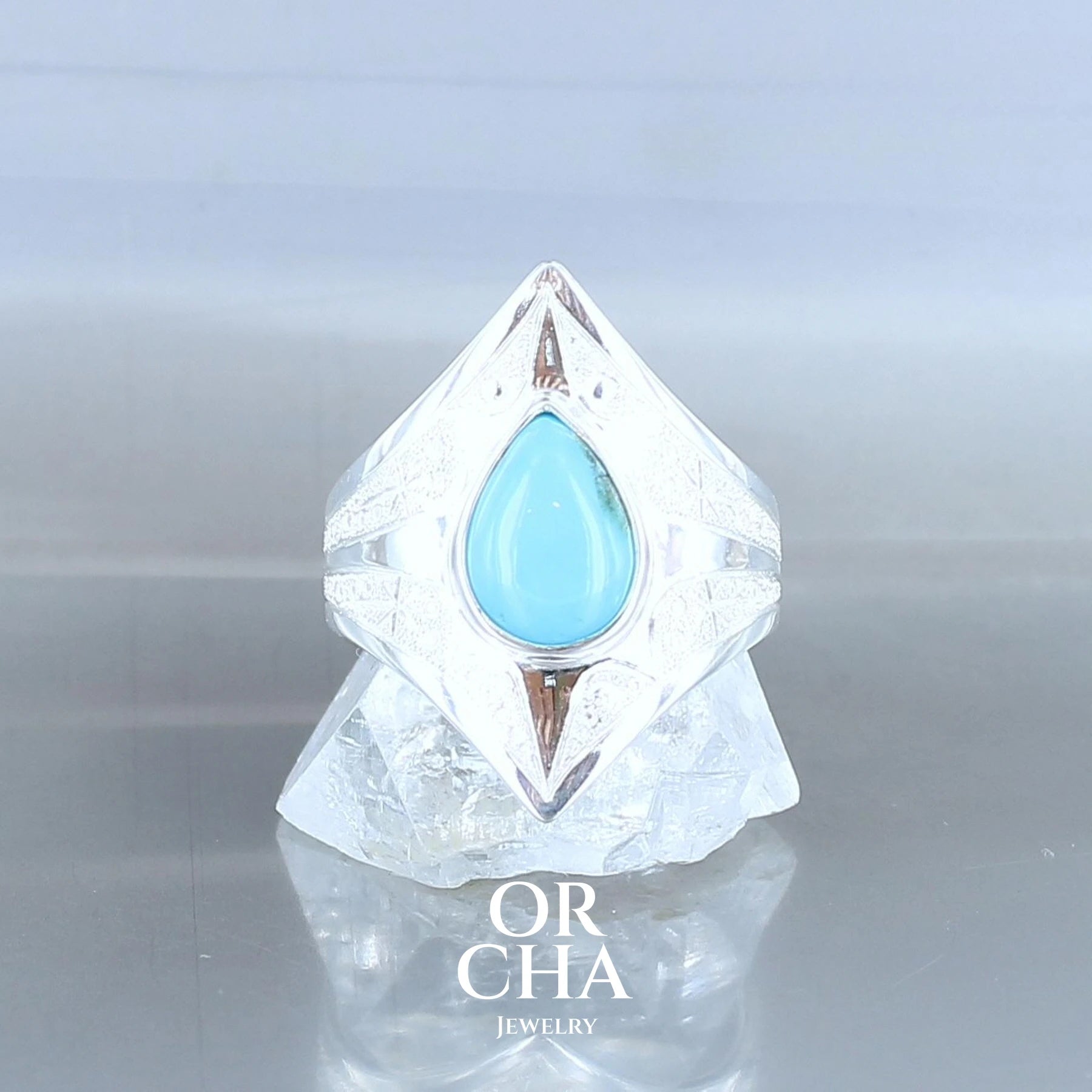
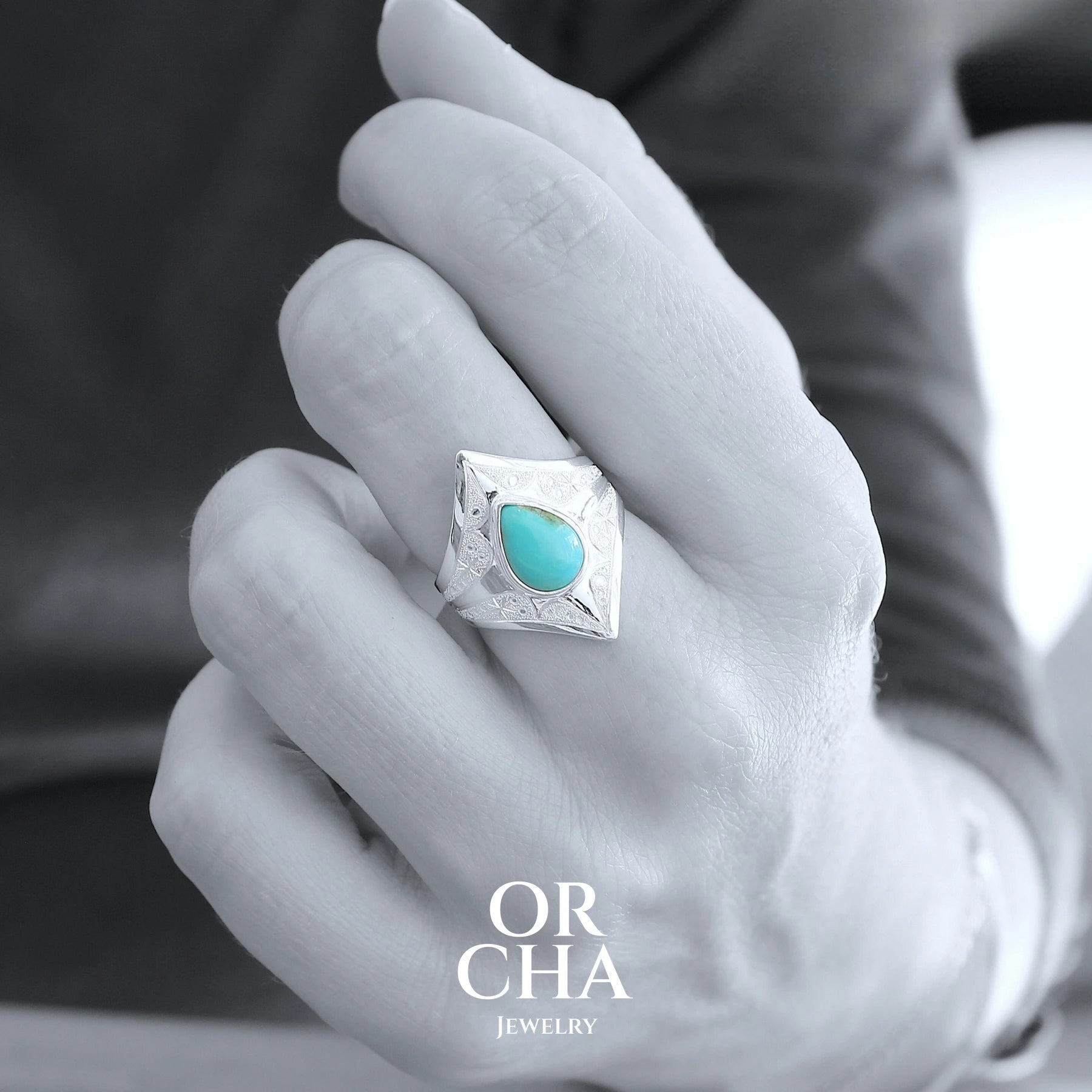
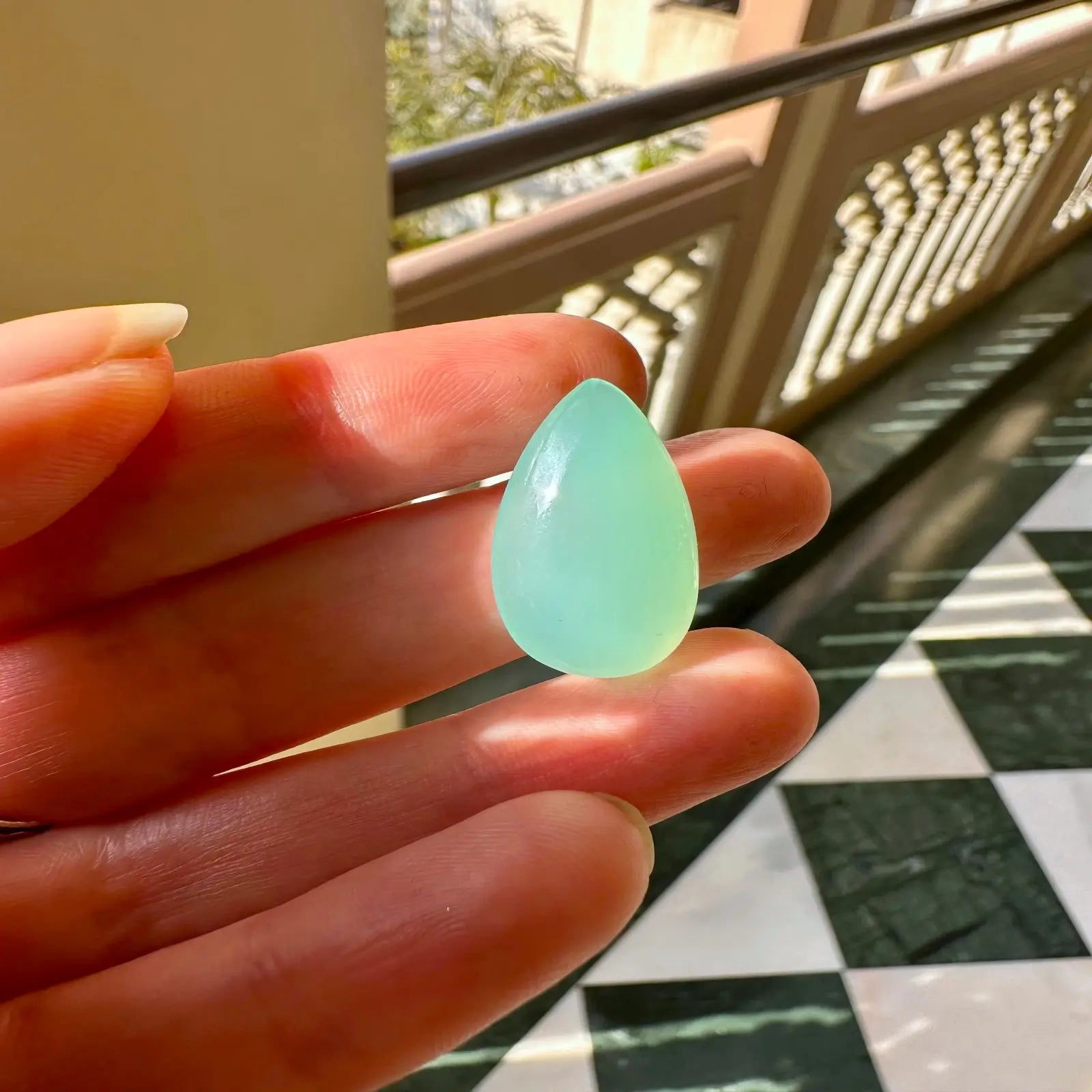
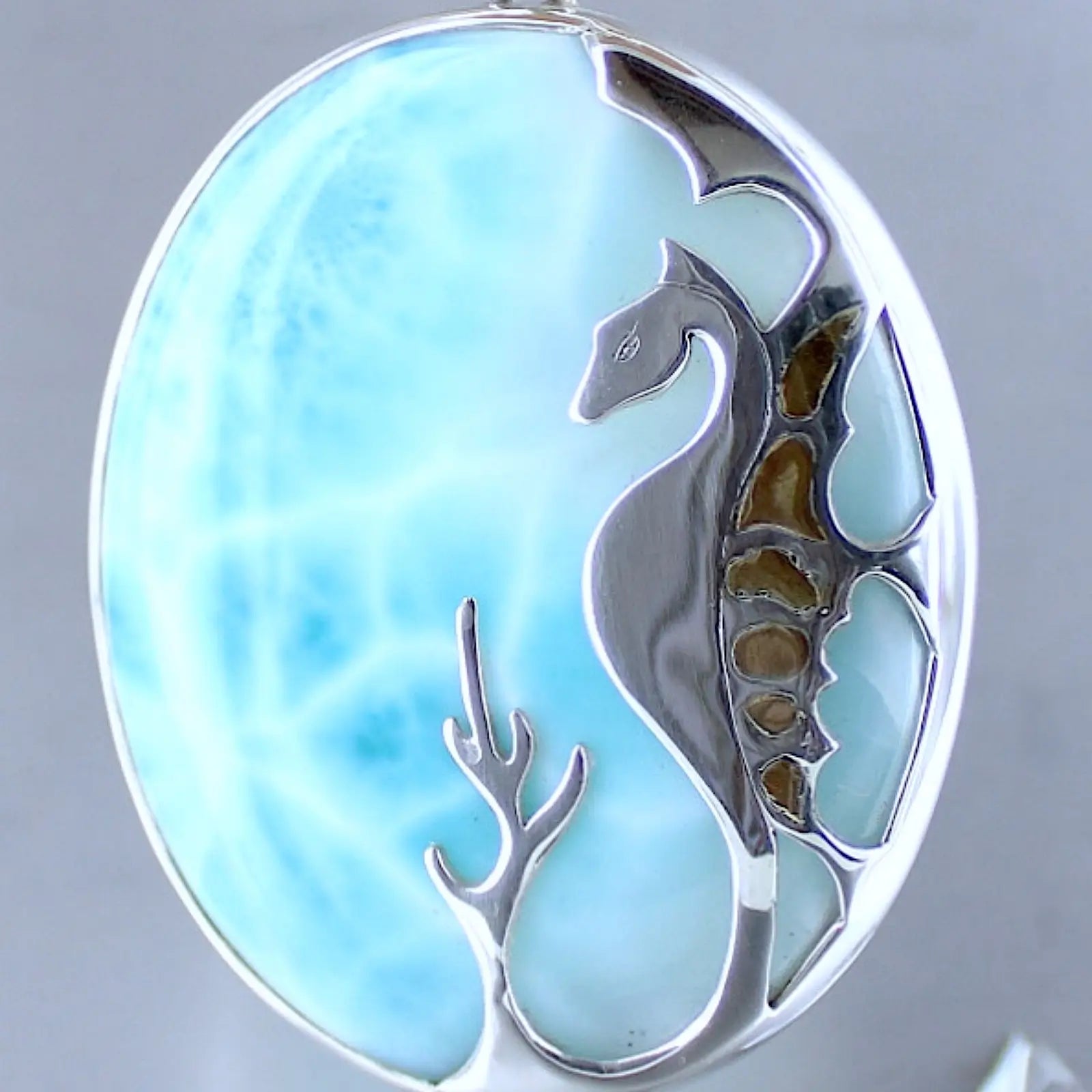
Turquoise is one of the first stones to have been used in jewelry. Egyptian adornments dating back to 5,500 BC are decorated with it—pieces found on the wrist of Queen Zer, among the oldest jewelry ever unearthed. It is an aluminum and copper phosphate, with a hardness of 5 to 6 on the Mohs scale, whose color varies from intense sky blue to blue-green depending on the copper or iron content: more copper gives a pure blue, more iron makes it lean towards green. It is opaque by nature. And depending on its origin, quality, and treatment, it can range from a common counter piece to an absolute rarity.
Stabilization—what we explain to you
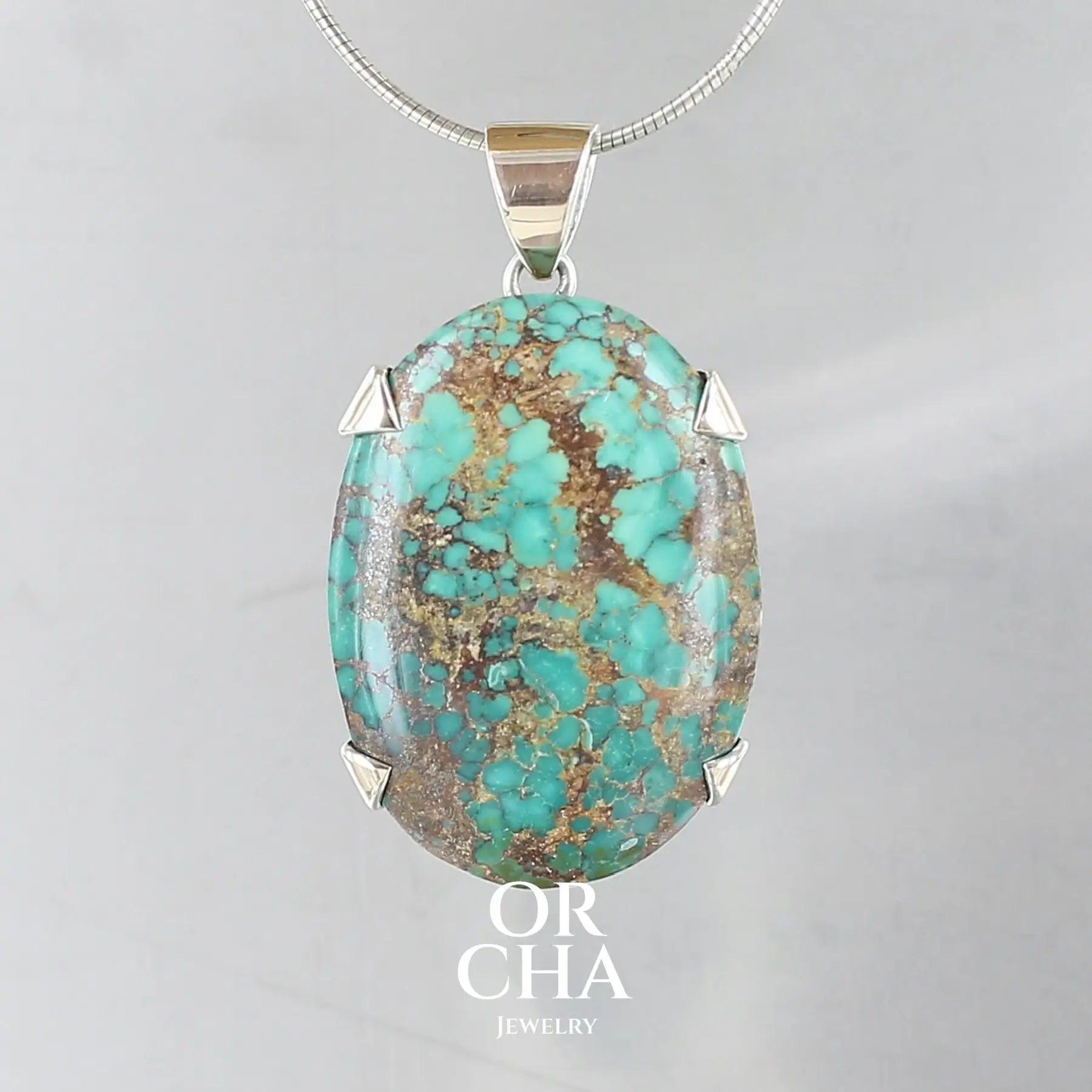
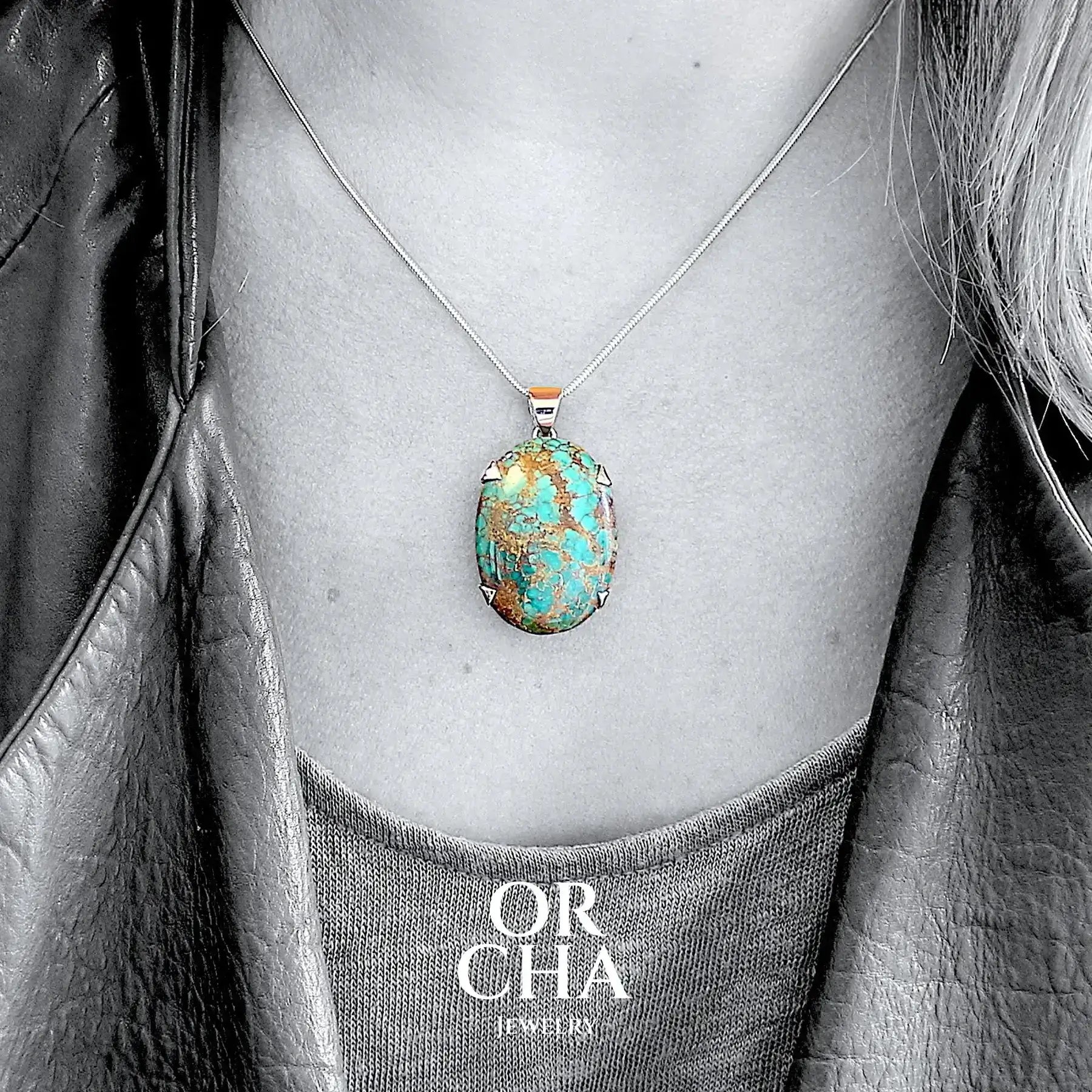
The vast majority of turquoise sold in jewelry has been stabilized: a resin is injected under pressure into the pores of the stone to harden it, make it less porous, and stabilize its color over time. This treatment is recognized and accepted in the industry—it is there for a good reason. Untreated natural turquoise absorbs skin oils, cosmetics, and sweat, and can discolor or crack over the years. Stabilization protects it. It is systematically mentioned in our product sheets, because you have the right to know what you are wearing. Some of our turquoises come from Iran (Nishapur region, a historic global reference for Persian turquoise) and Arizona—two of the most respected origins in the industry.
Golden Hill Turquoise—an exception in Kazakhstan
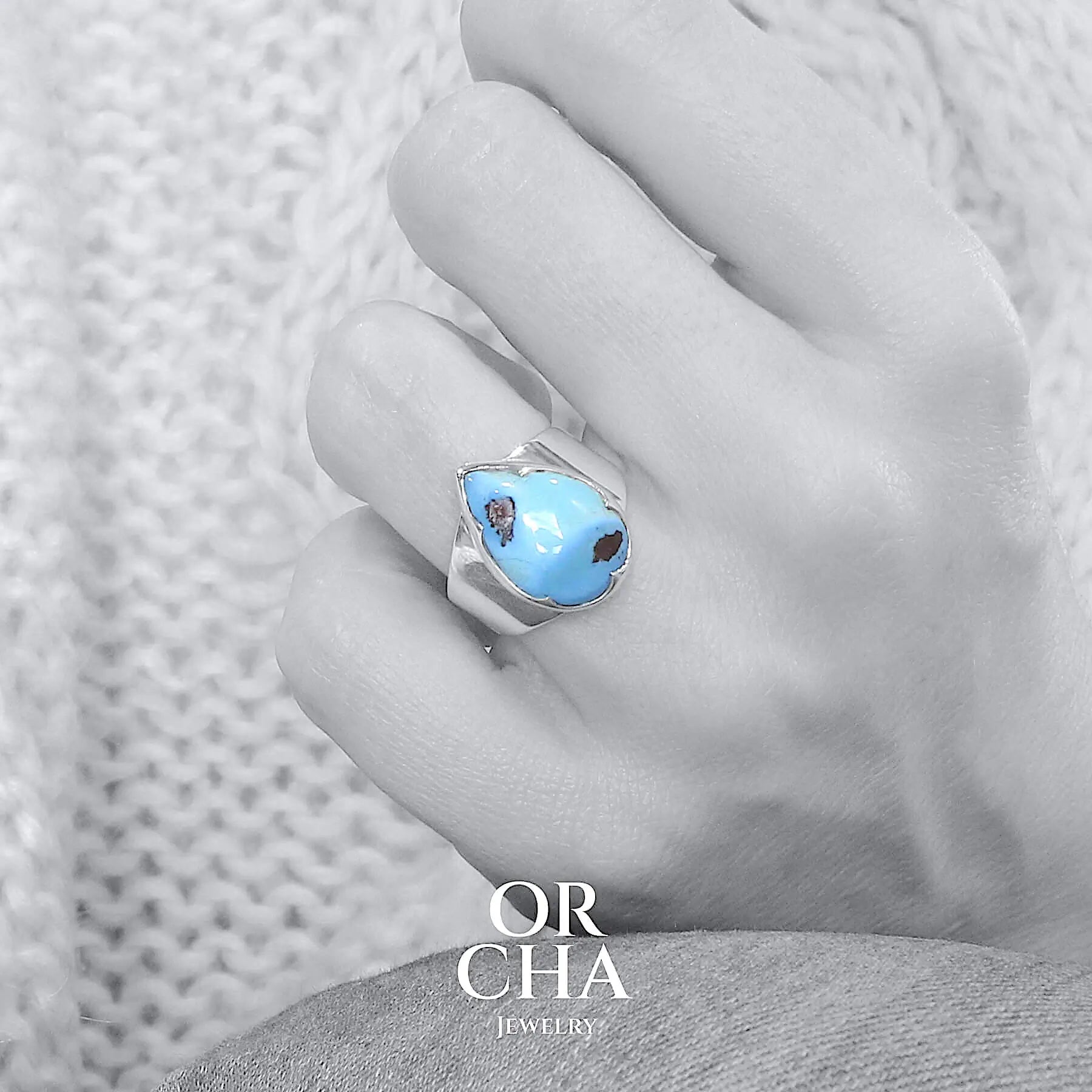
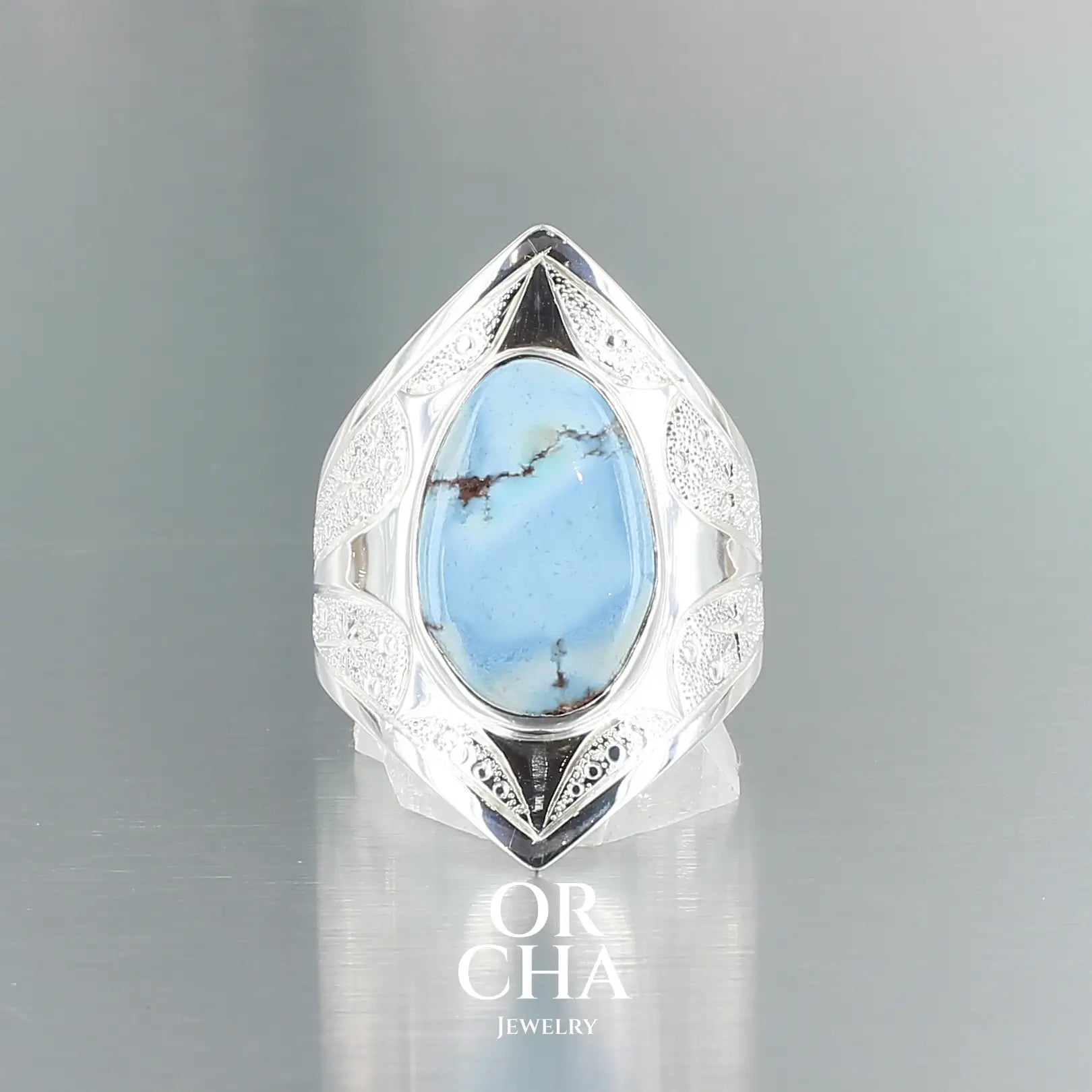
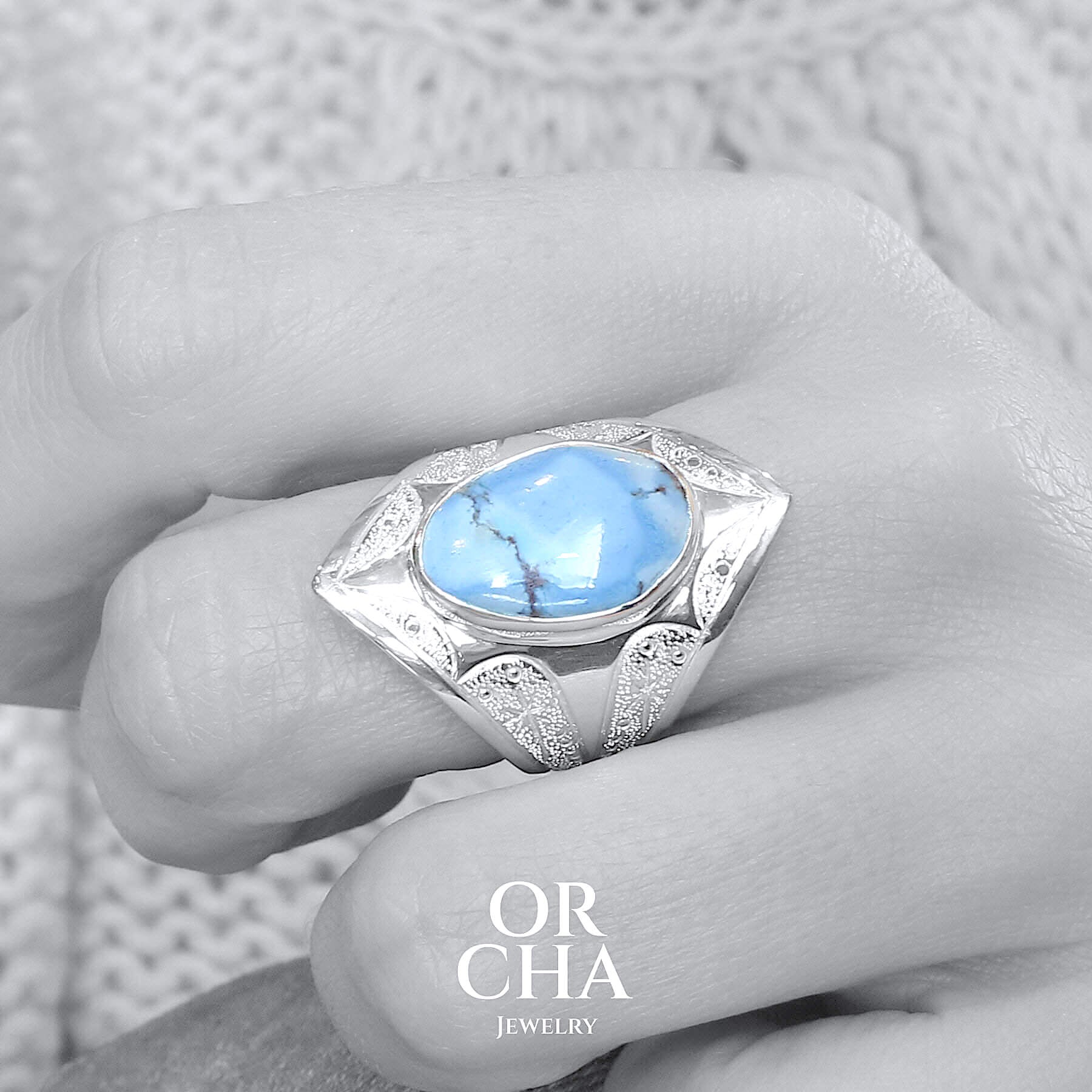
There are turquoises that do not follow the usual rules. Golden Hill is one of them. Discovered about fifteen years ago in the remote hills of Kazakhstan, this variety can only be mined during the winter months—the deposit is flooded for the rest of the year. This natural extraction constraint partly explains its rarity and price. But what truly sets it apart is its mineral structure: dense and hard enough to not require stabilization. Golden Hill Turquoise is offered at Orcha in its natural, untreated state. Its color—a range of blues blending intense sky blue, lavender, and natural brown matrix—is entirely its own. No resin, no treatment: what you see is what the stone is.
Symbolism and legends
For the Apache and Navajo peoples, turquoise was a piece of sky fallen to earth—a symbol of the alliance between the sky and the sea, a warrior's stone that granted them protection on the battlefield. The Aztecs reserved it exclusively for the gods, considering humans too imperfect to be worthy of it. In Tibet, women wore large headdresses adorned with turquoise and coral, believing in its protective virtues—a tradition documented over several centuries. In ancient Egypt, its blue color recalled the light that chases away the darkness: it symbolized rebirth and hope. Turquoise traverses history like few stones manage—on every continent, in every civilization, it has been chosen to say something essential about the relationship between humanity and the sky.
Turquoise at Orcha Jewelry
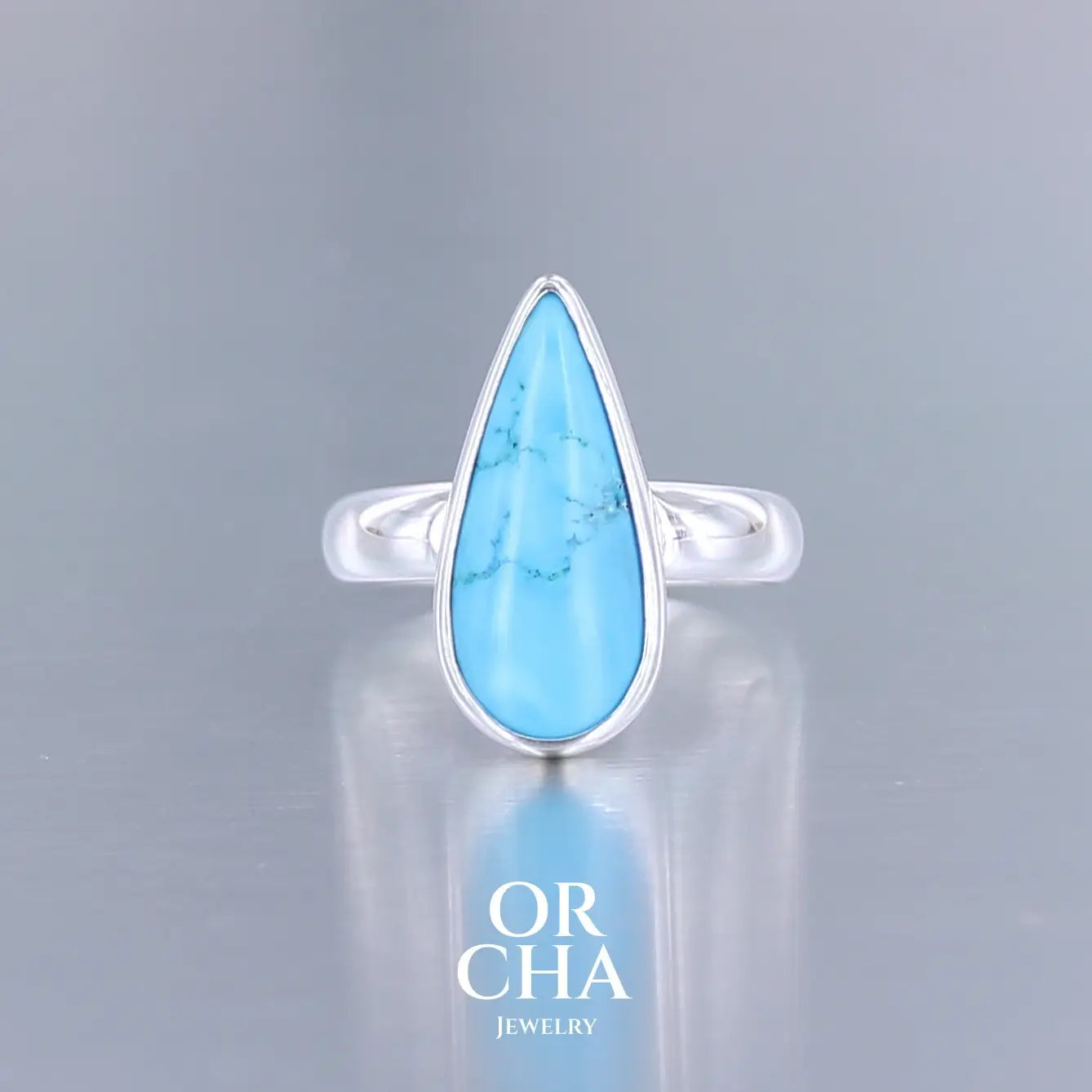
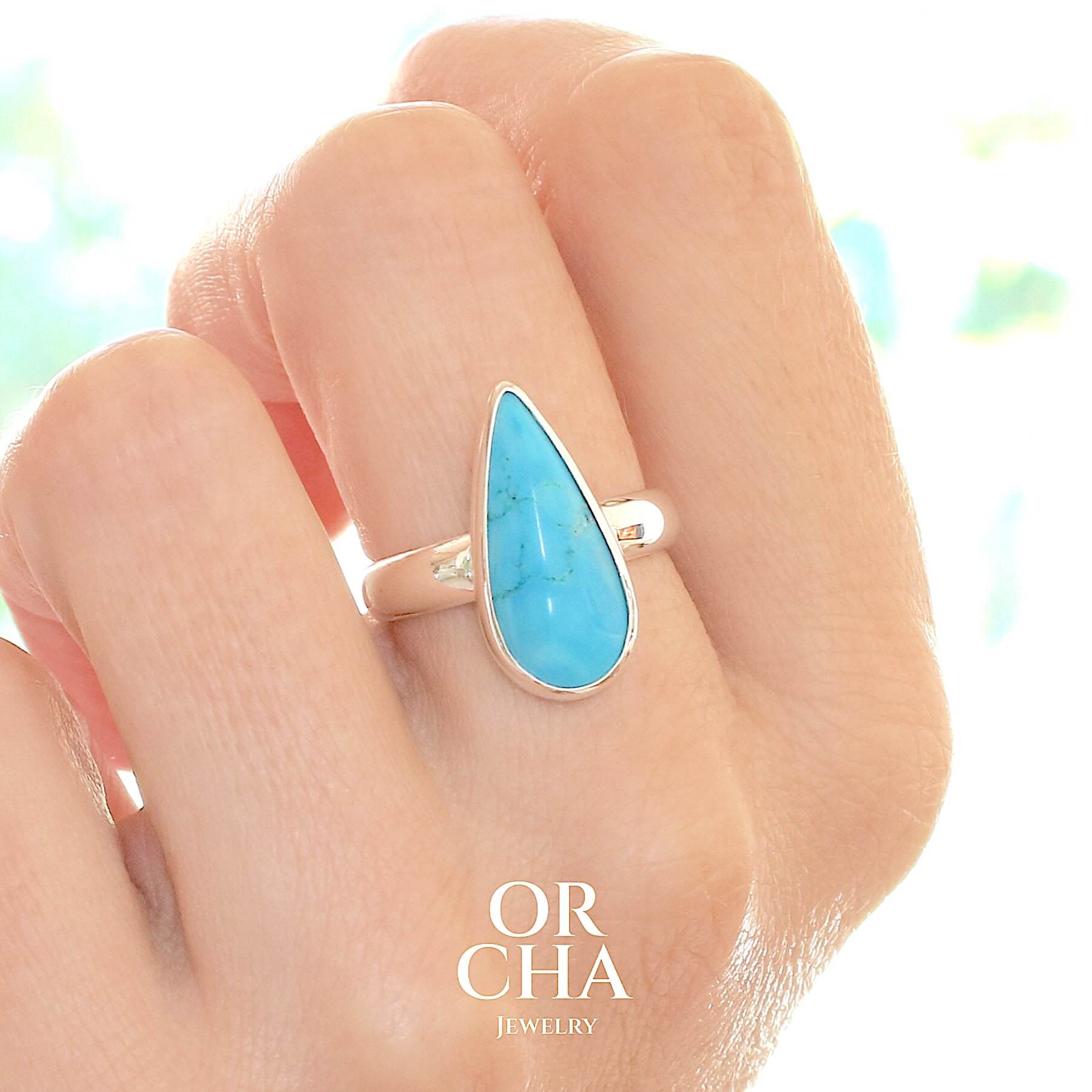
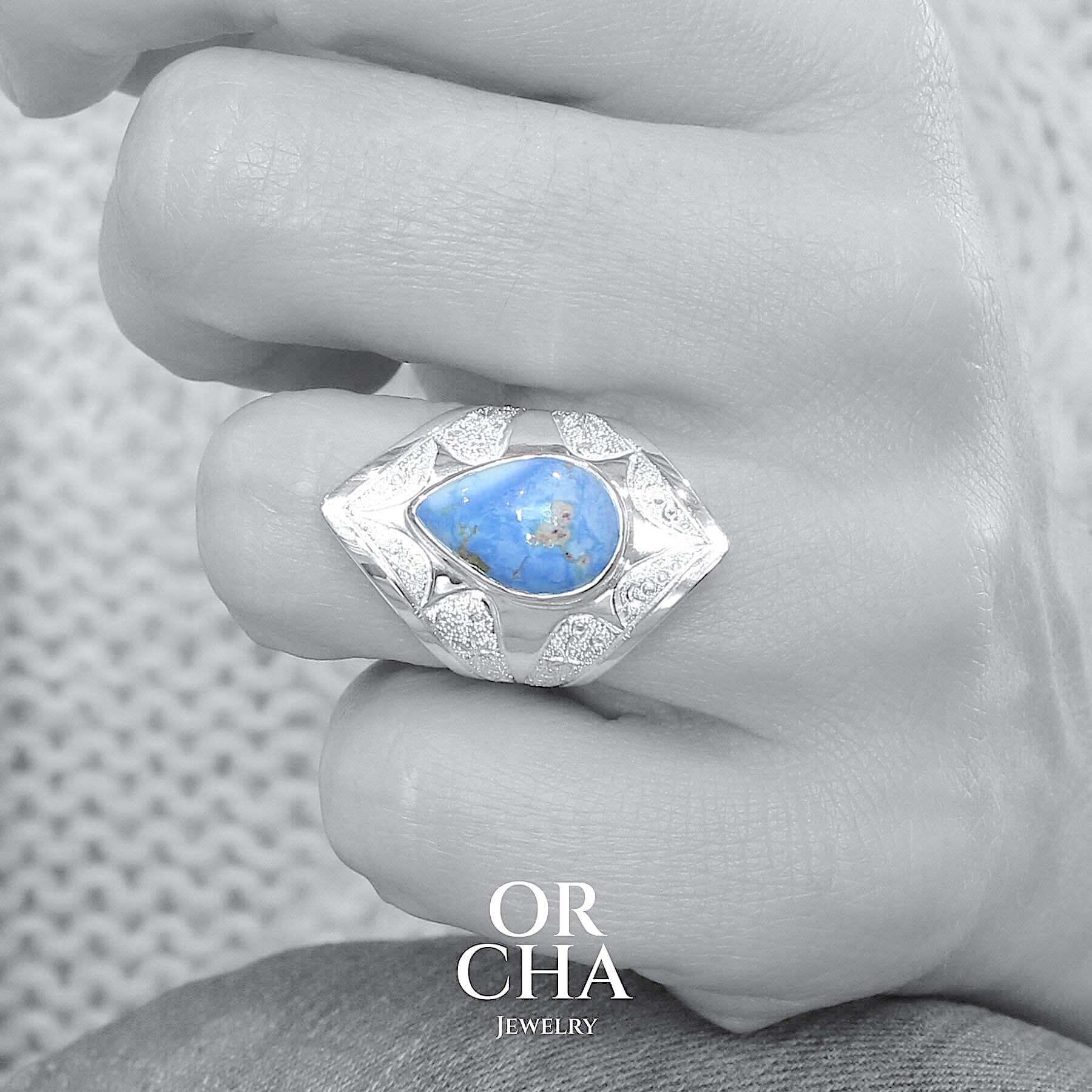
Our Turquoise jewelry is made in 925 sterling silver by our artisan partners. Each stone is identified by its origin in the product sheet—Persia, Arizona, or Golden Hill—because these designations are not interchangeable. To better understand our sourcing approach and our transparency policy on treatments, visit our Artisans & Sourcing page. For any questions about the difference between stabilized and natural turquoise, or about the care of your jewelry, our Stones & Gemstones FAQ answers you precisely.