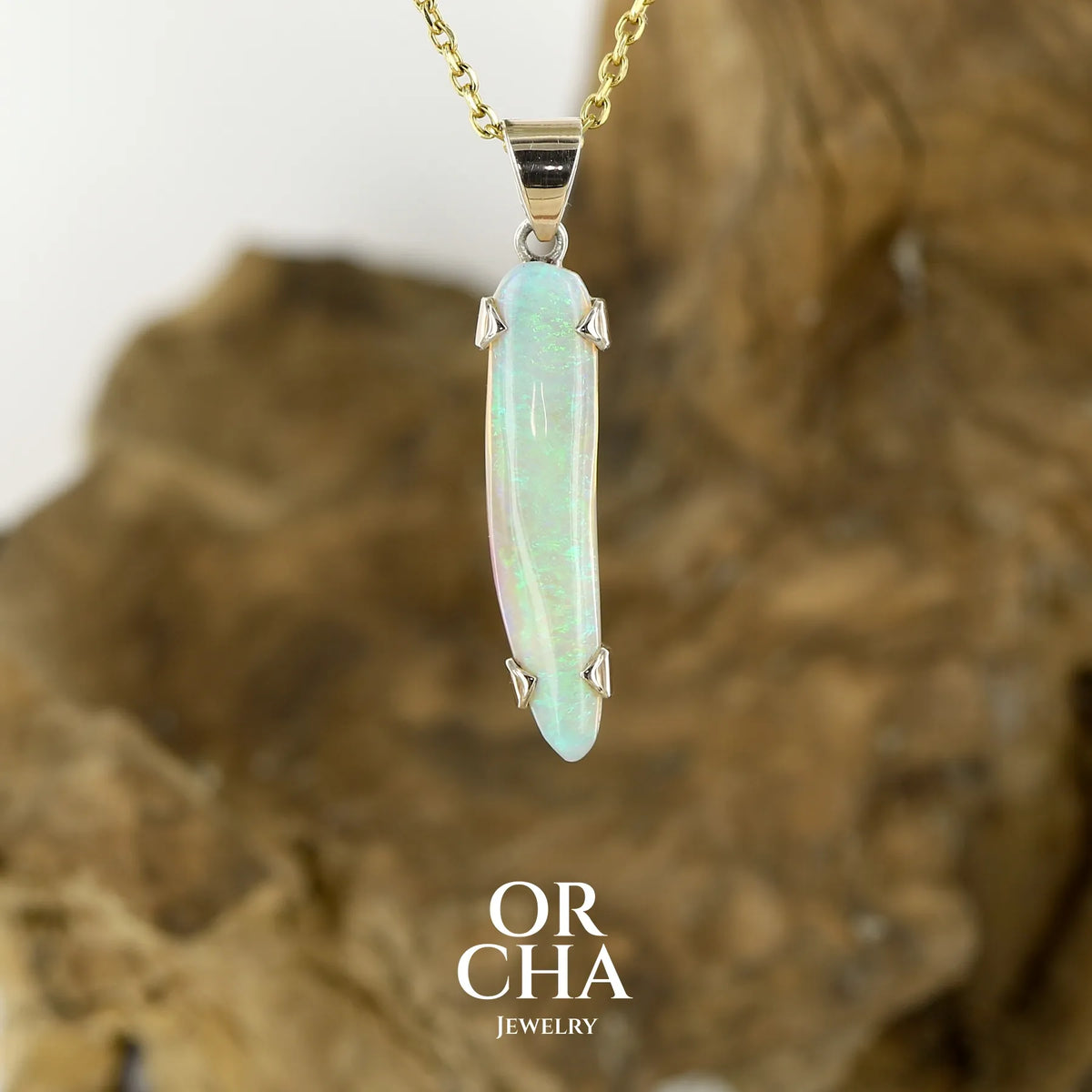
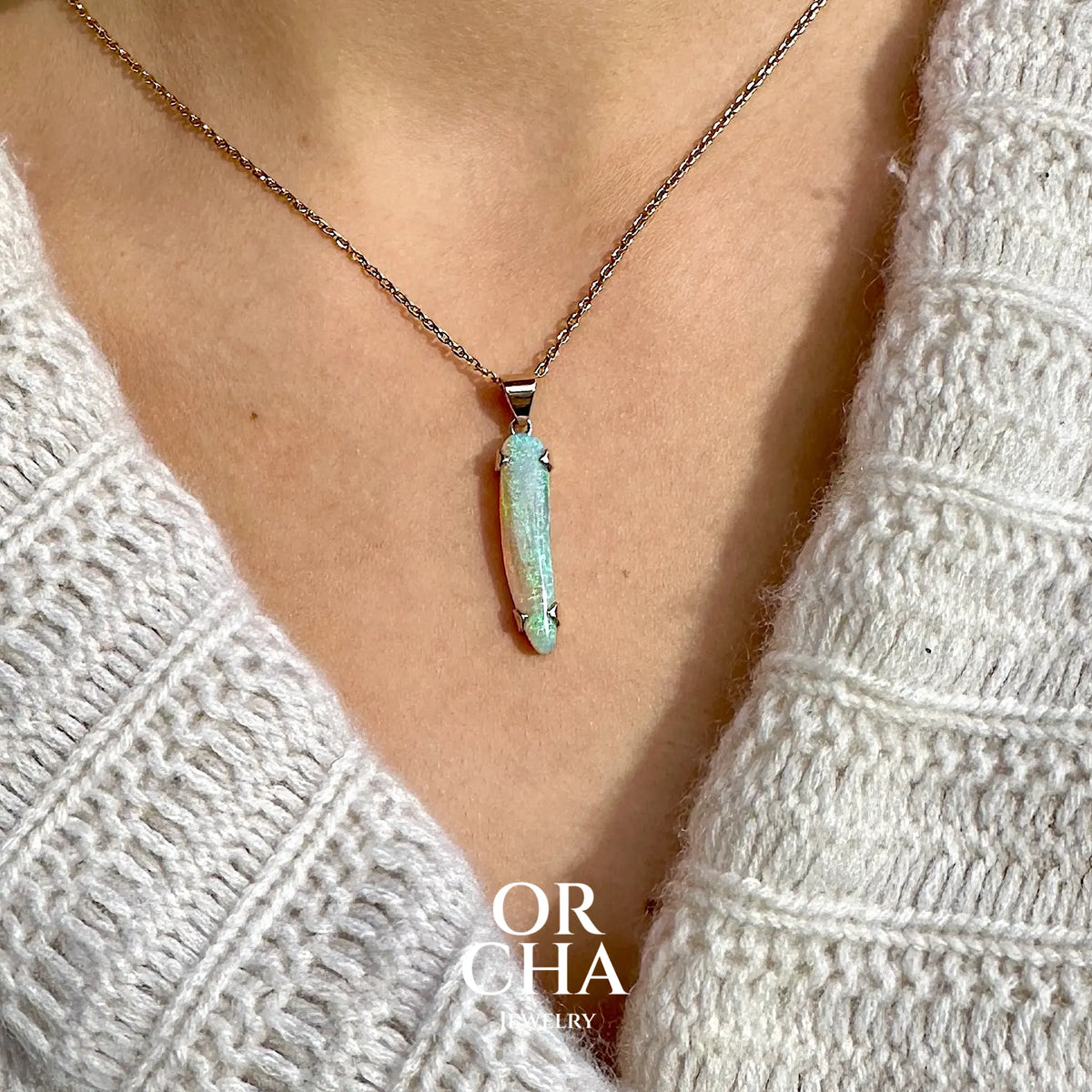
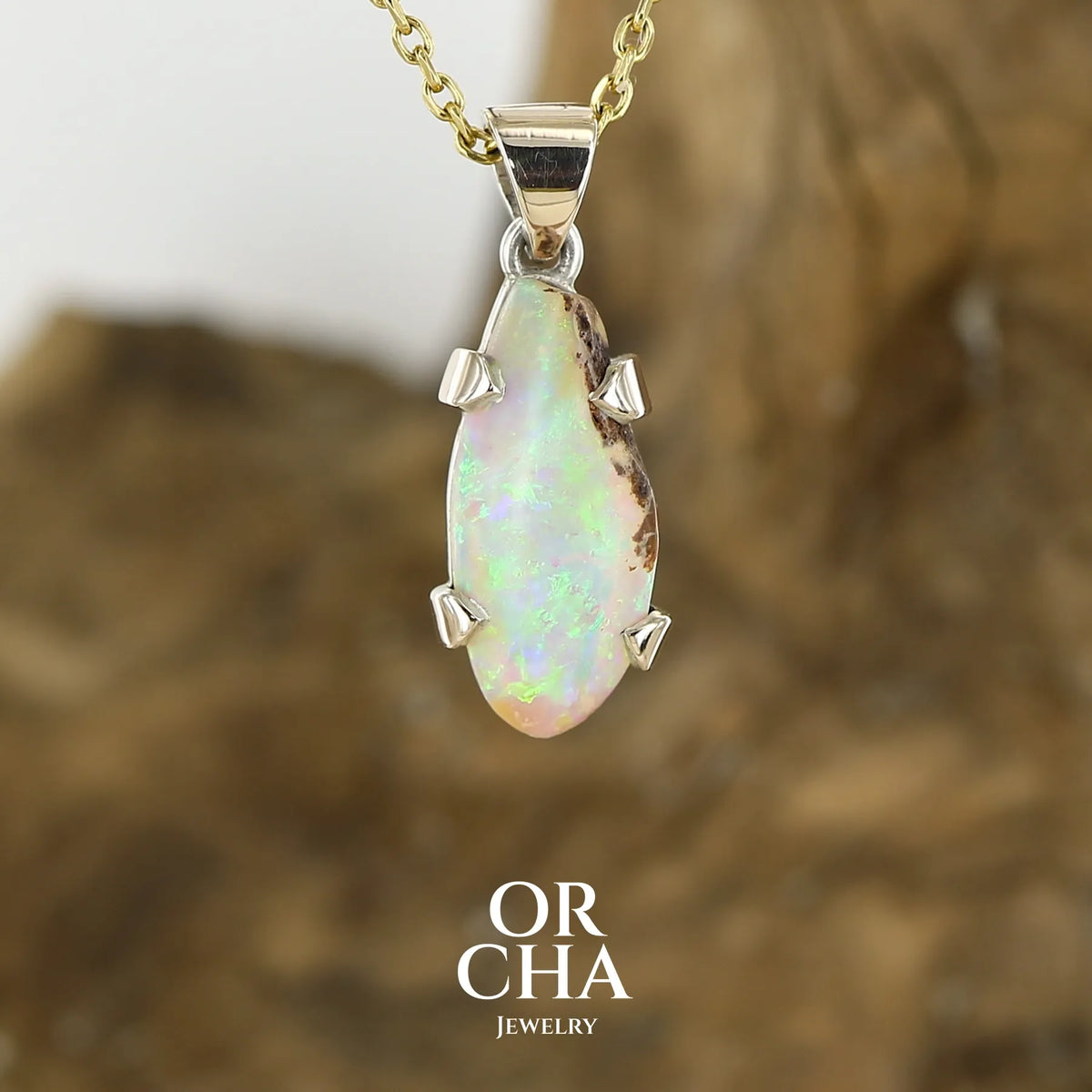
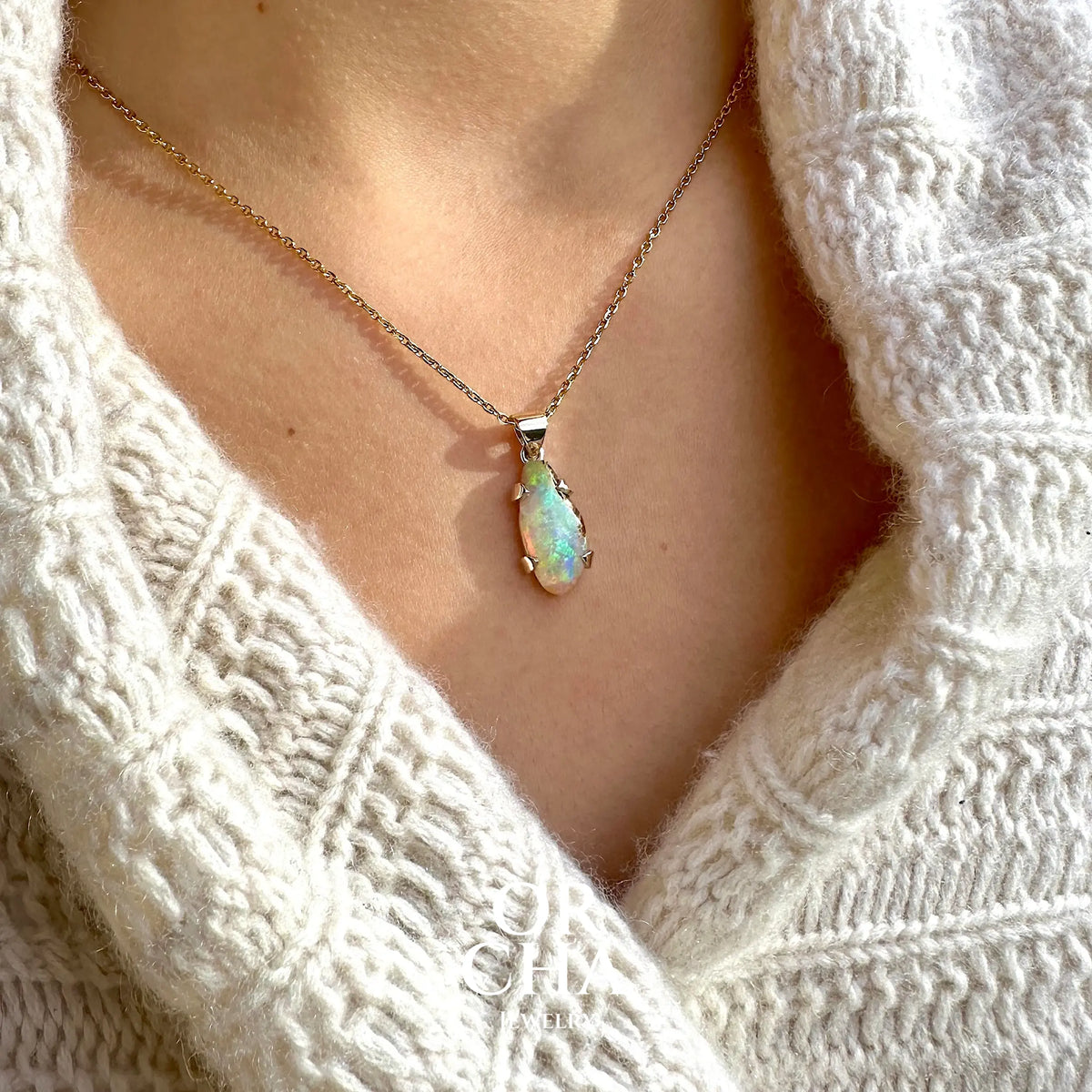
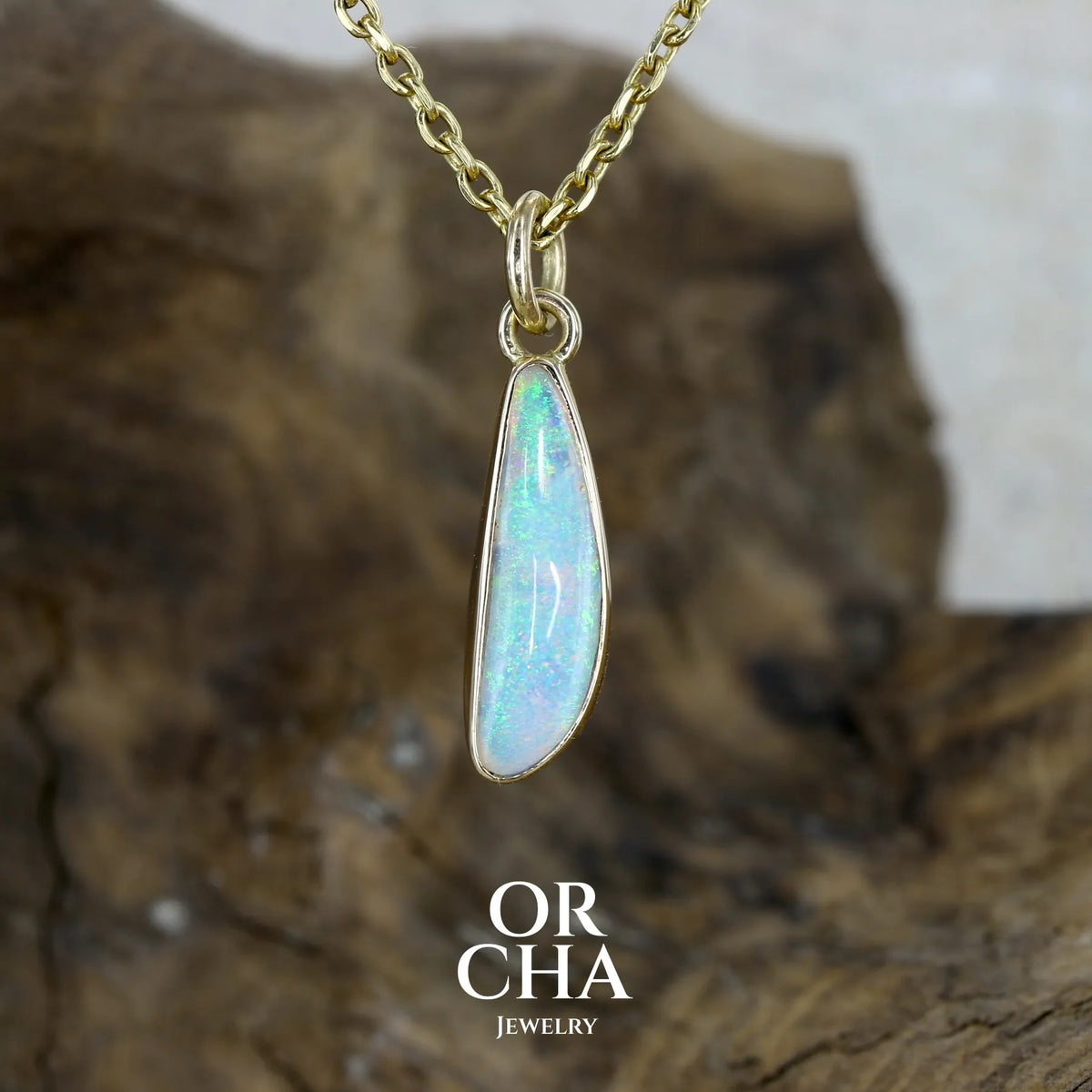
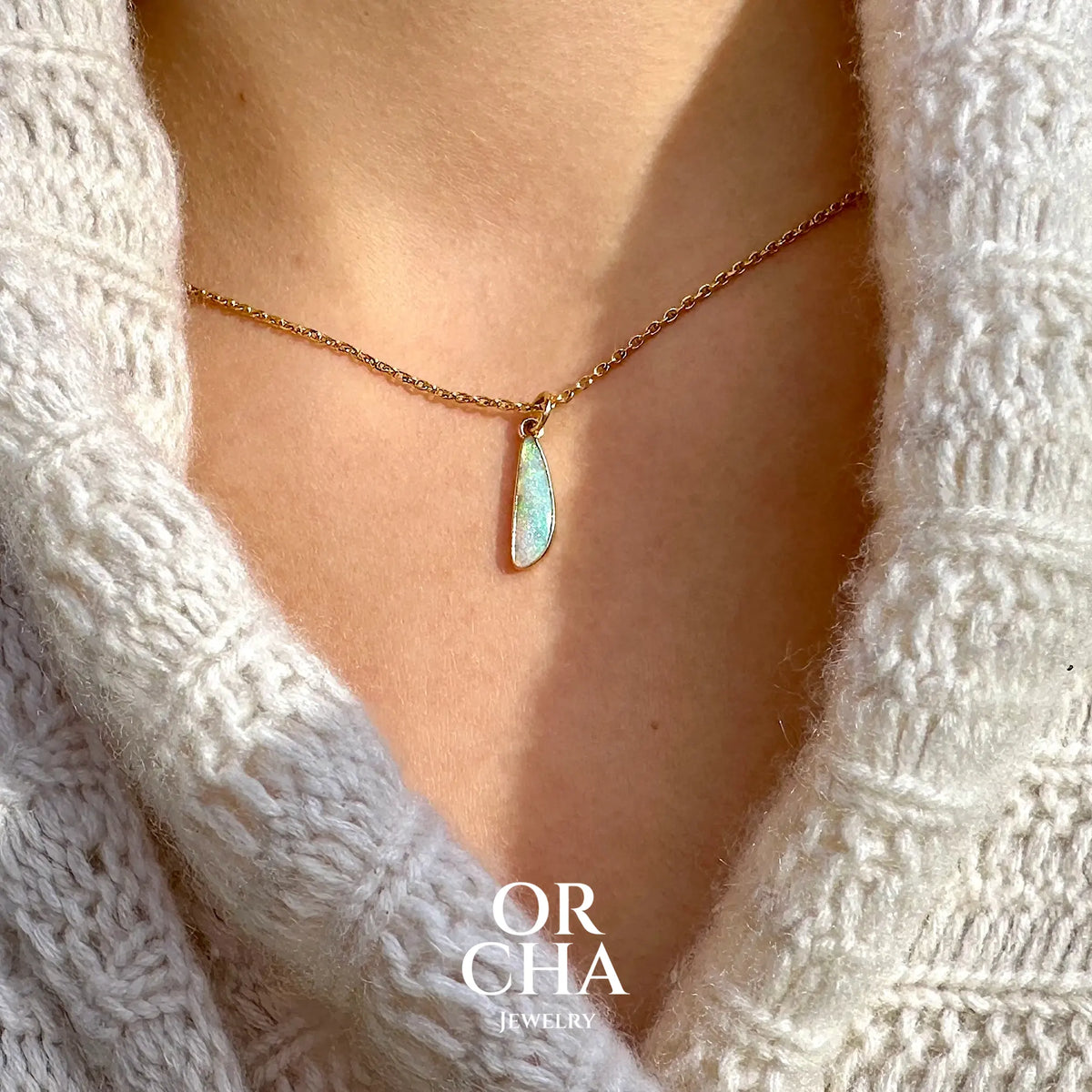
Opal — The Only Stone That Contains All Colors at Once
There are beautiful stones. And then there is Opal. No other gemstone produces what gemmologists call "play of color" — this inner dance of blues, greens, reds, and purples that changes with every movement, every variation of light. This extraordinary optical phenomenon is due to the very structure of the stone: billions of tiny silica spheres, arranged in regular layers, diffract light and break it down into an iridescent spectrum. The more uniform and well-organized the spheres are, the more intense and precious the fire becomes. Opal does not reflect light — it reinvents it.
Its name comes from the Sanskrit Upala, "precious stone," and the Latin Opalus. An etymology that says it all: since antiquity, Opal has been considered the queen of gemstones, the one that contains them all.
Boulder Opal, White Opal, Australian Opal — The Ones We Choose
At Orcha Jewelry, we work exclusively with fine Australian opals, the only ones for which we can guarantee the long-term stability and intensity of their fire.
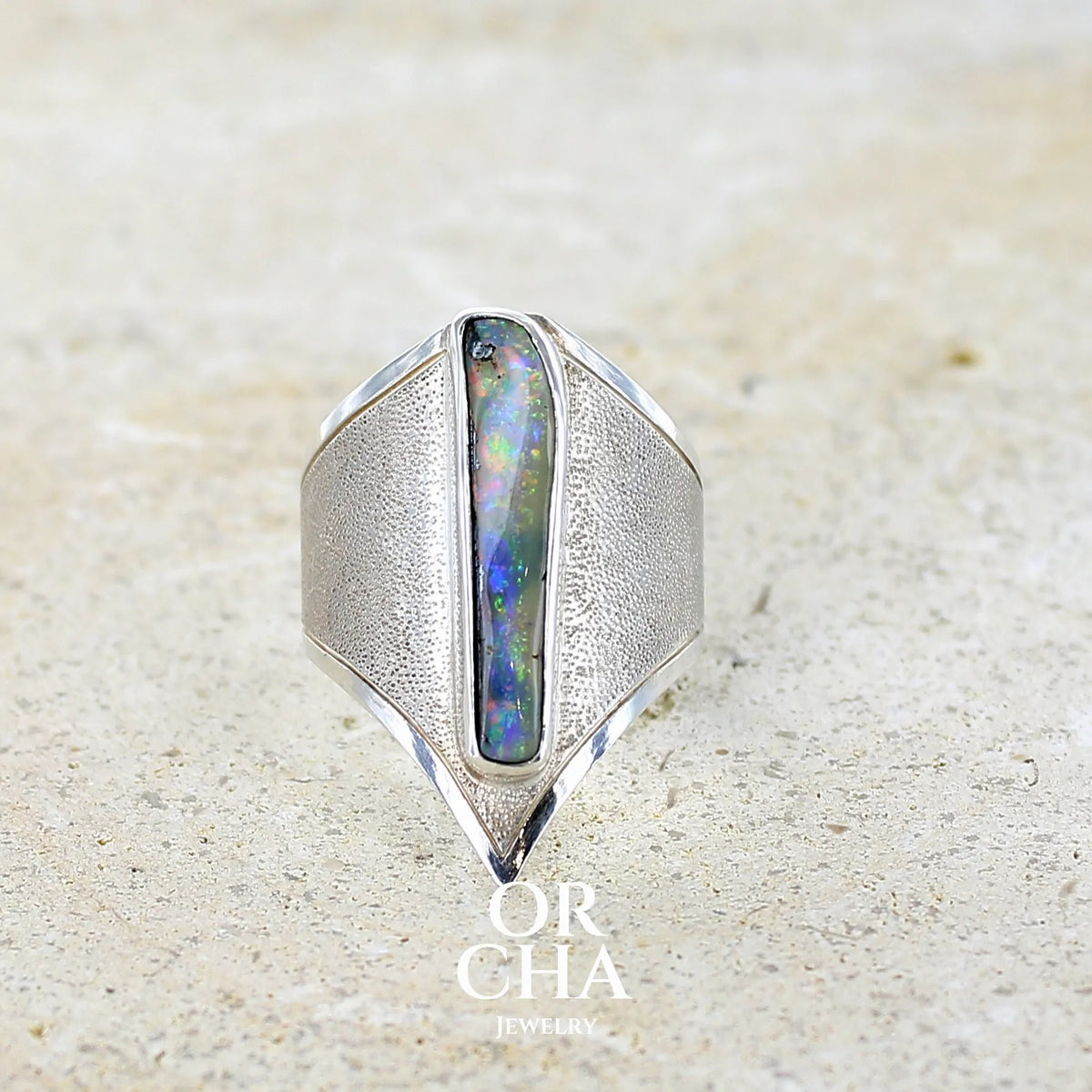
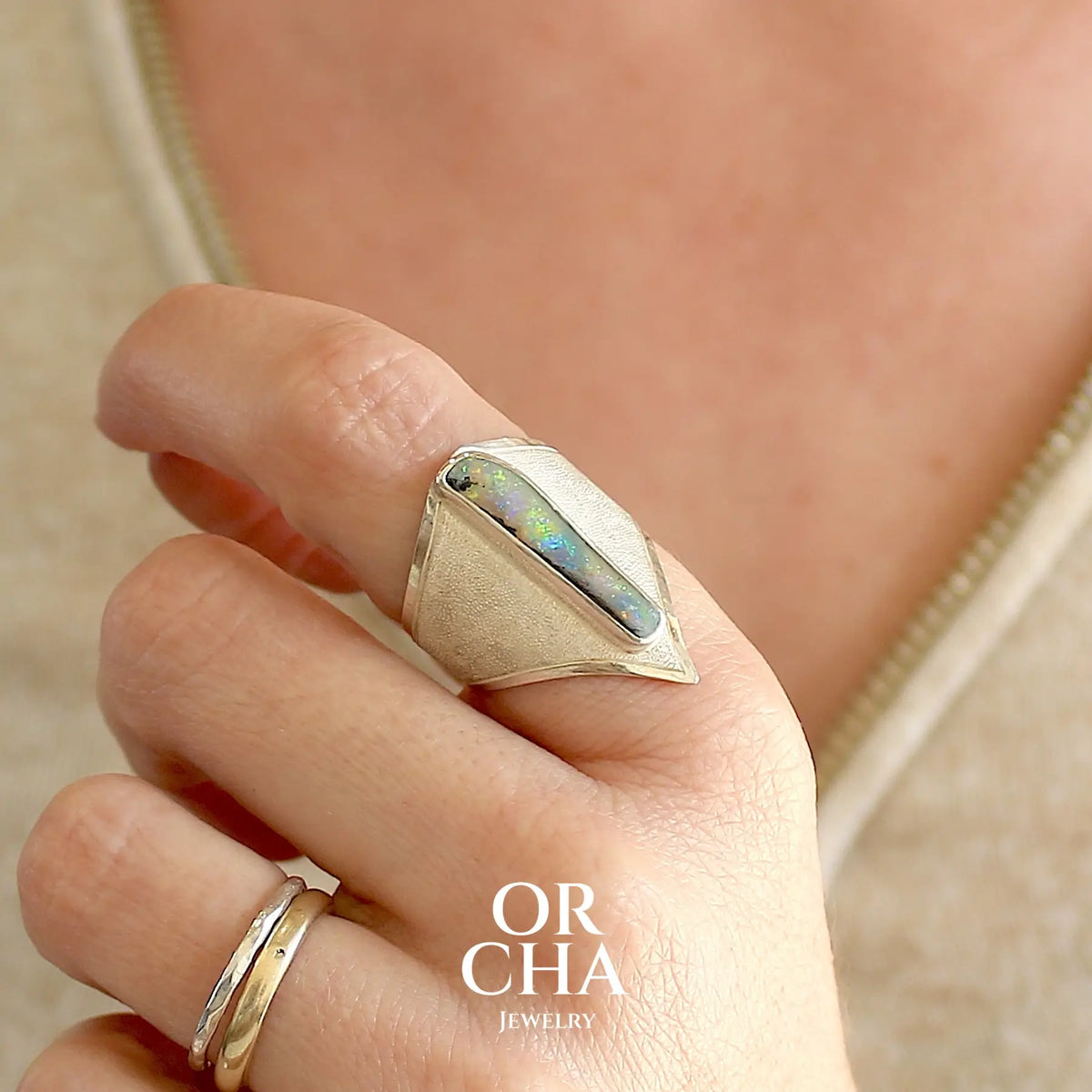
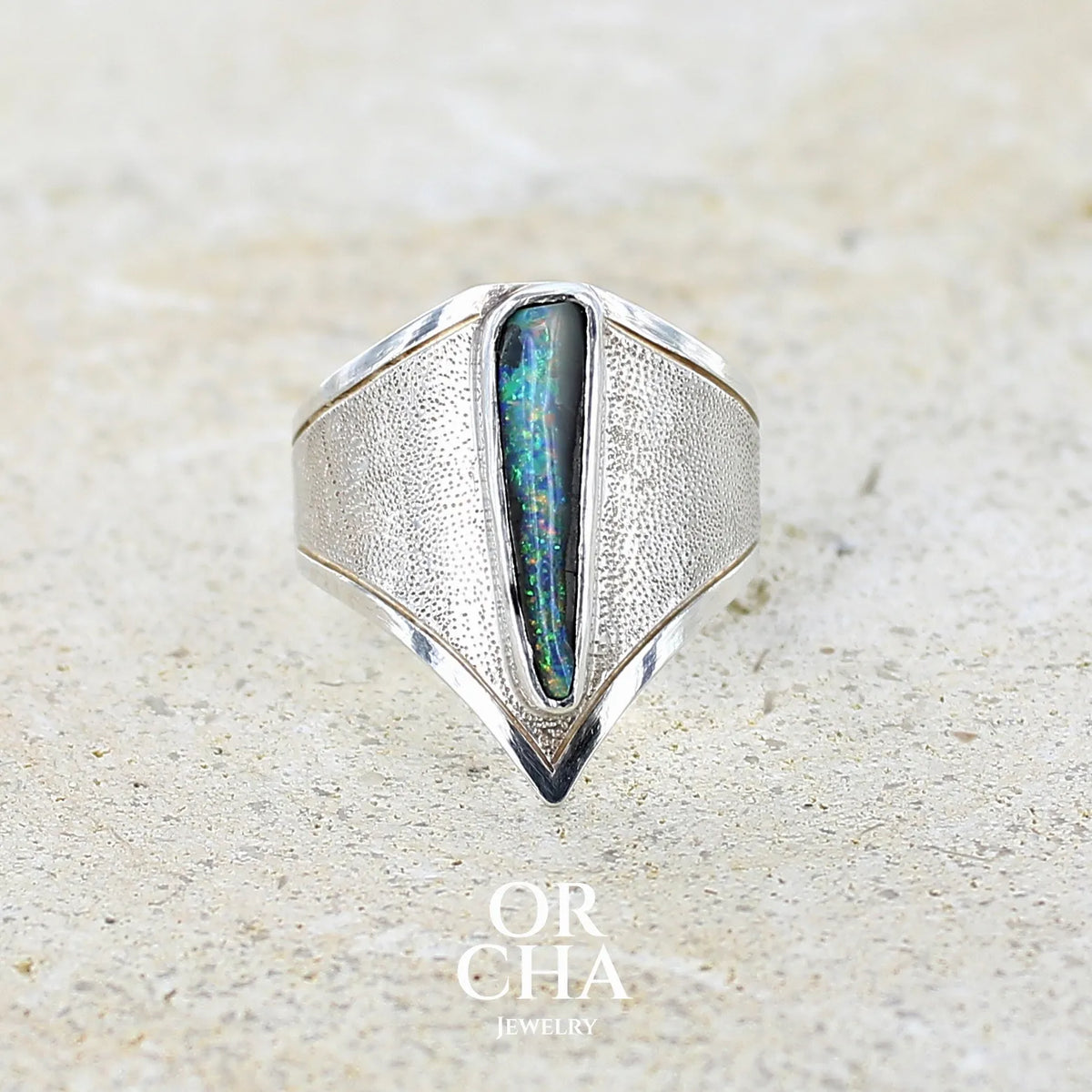
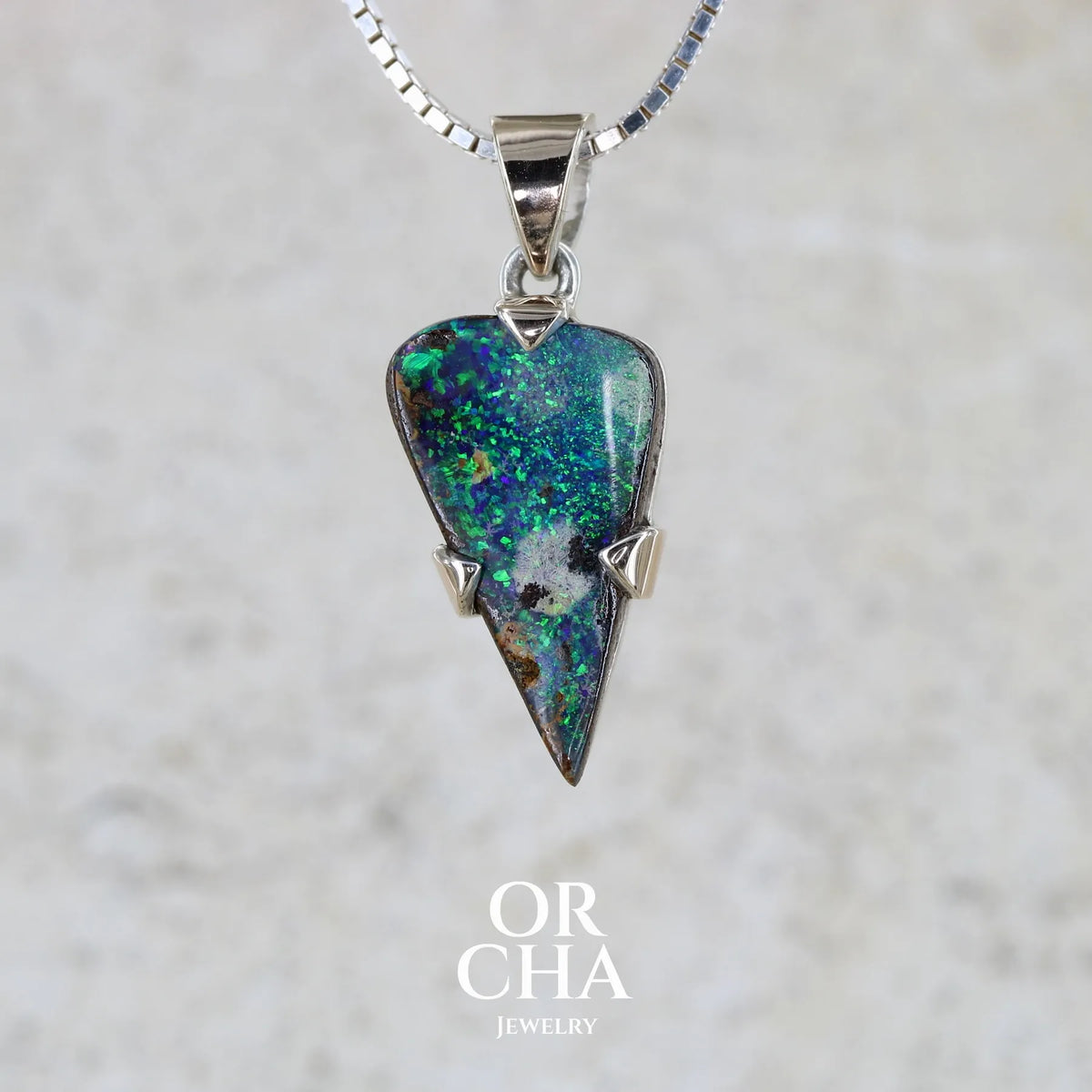
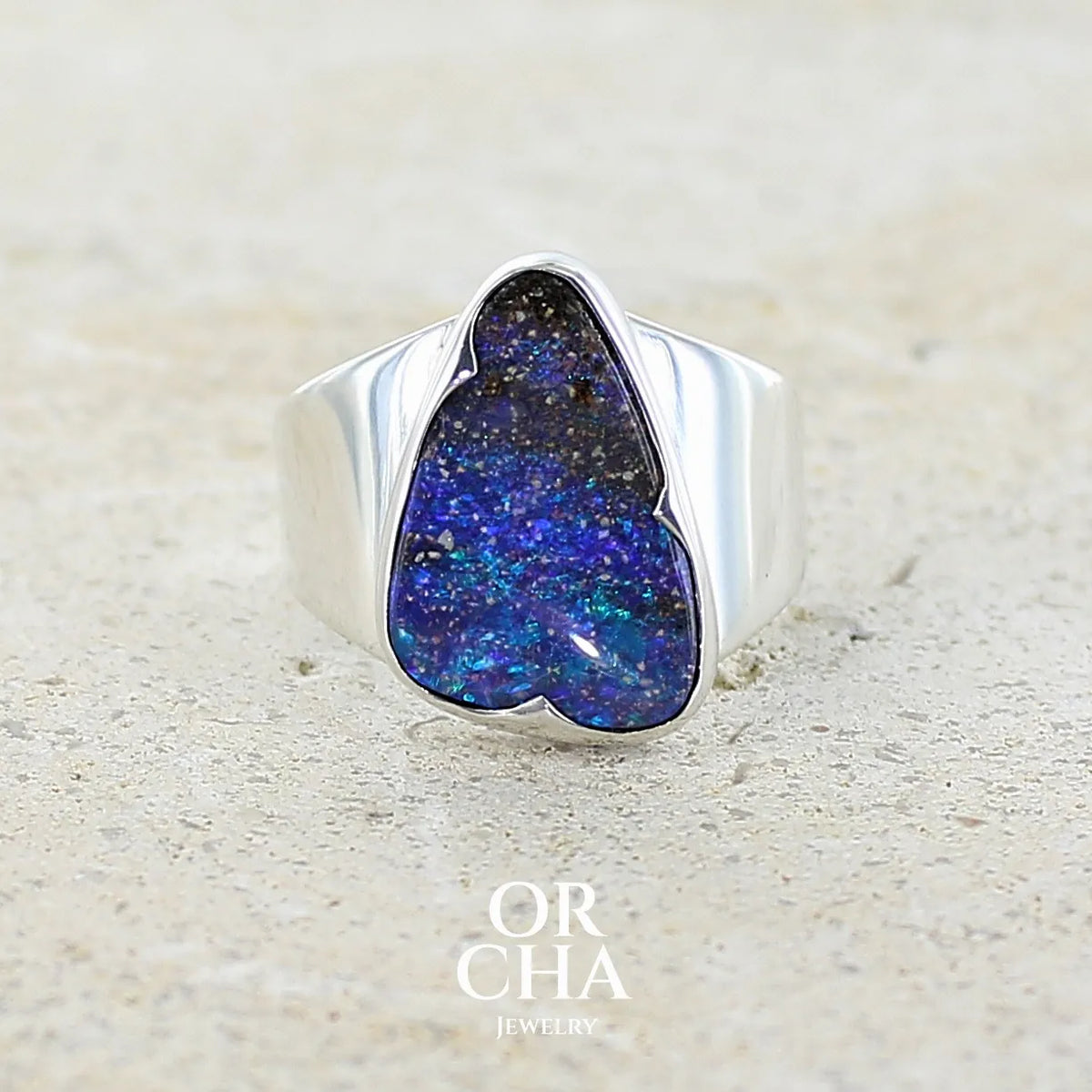
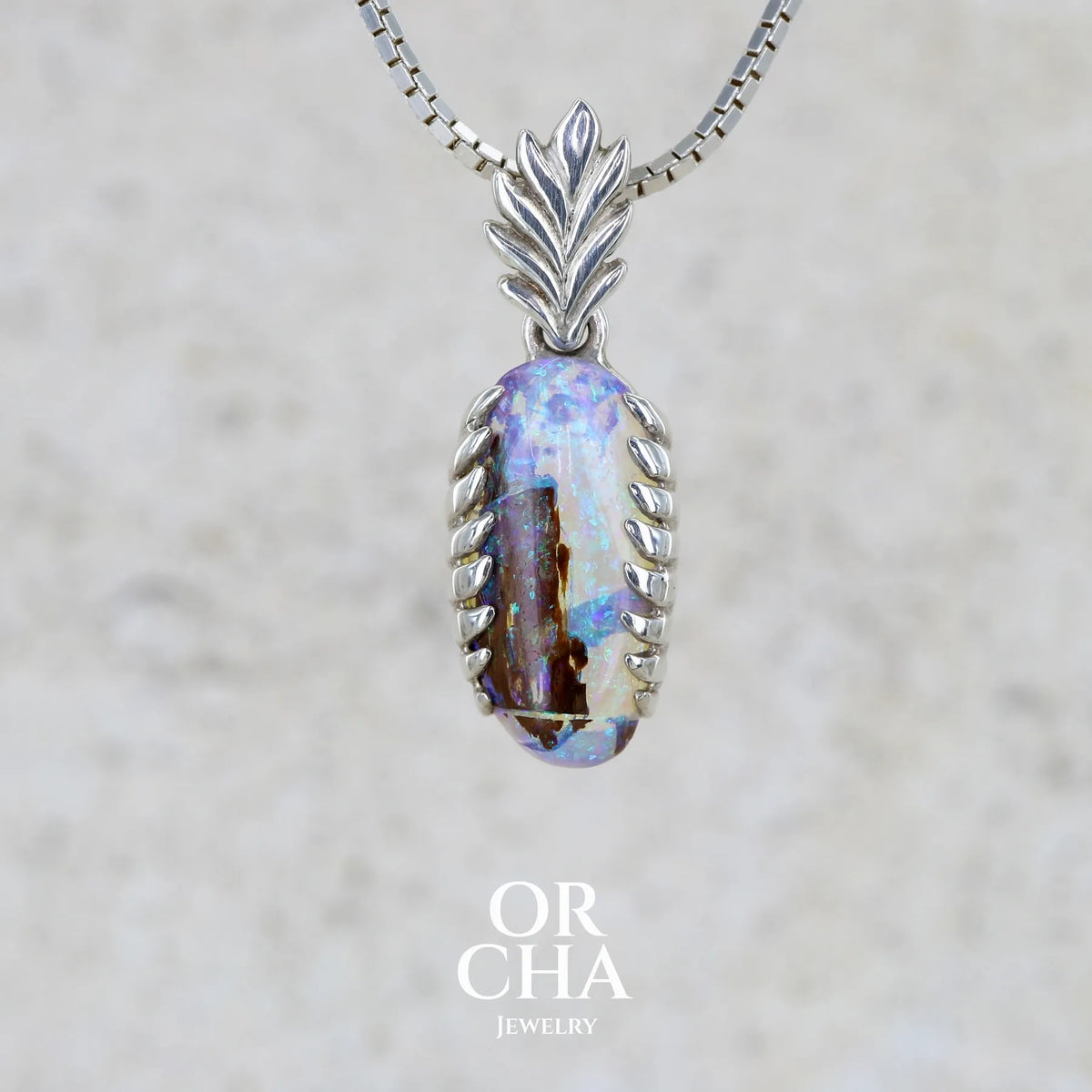
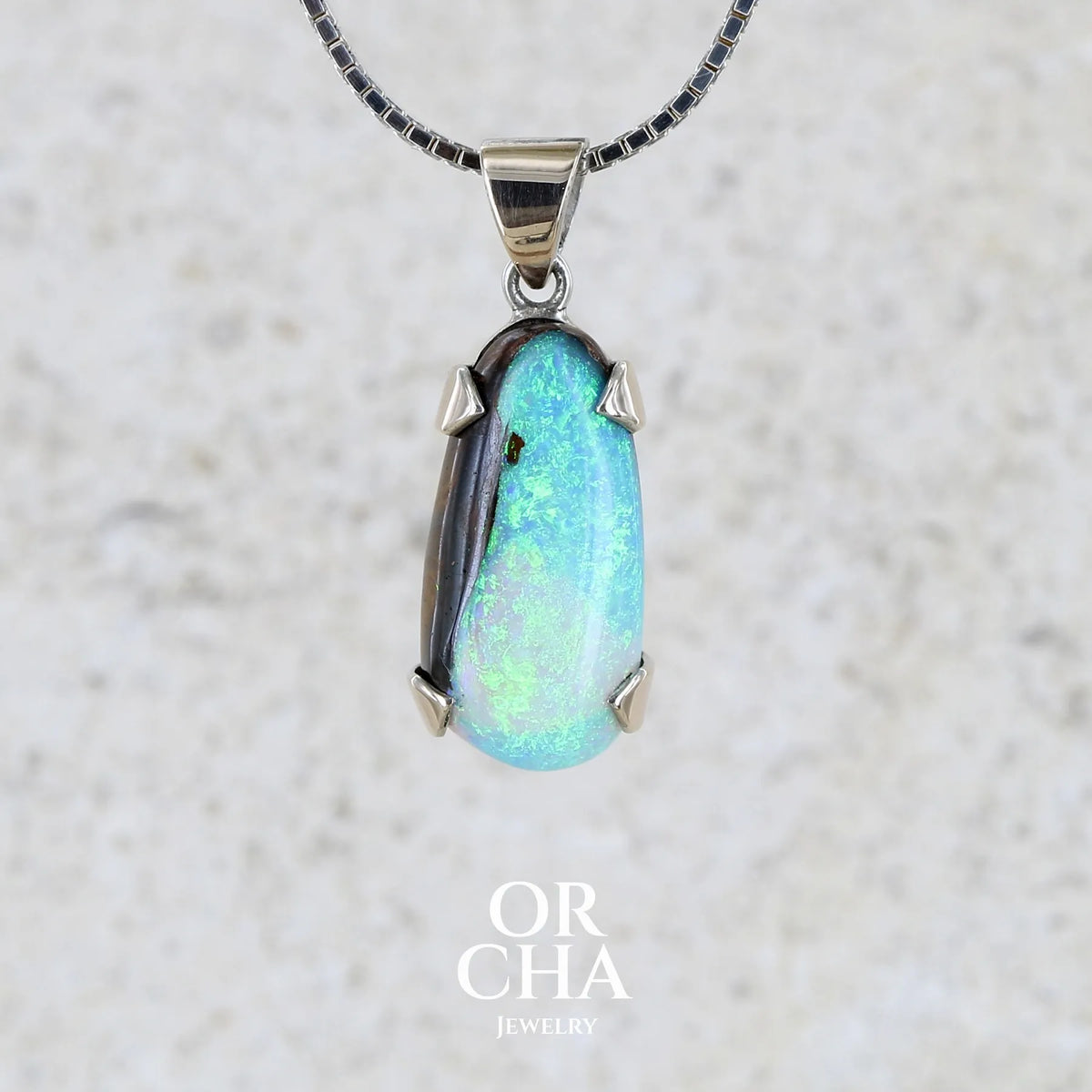
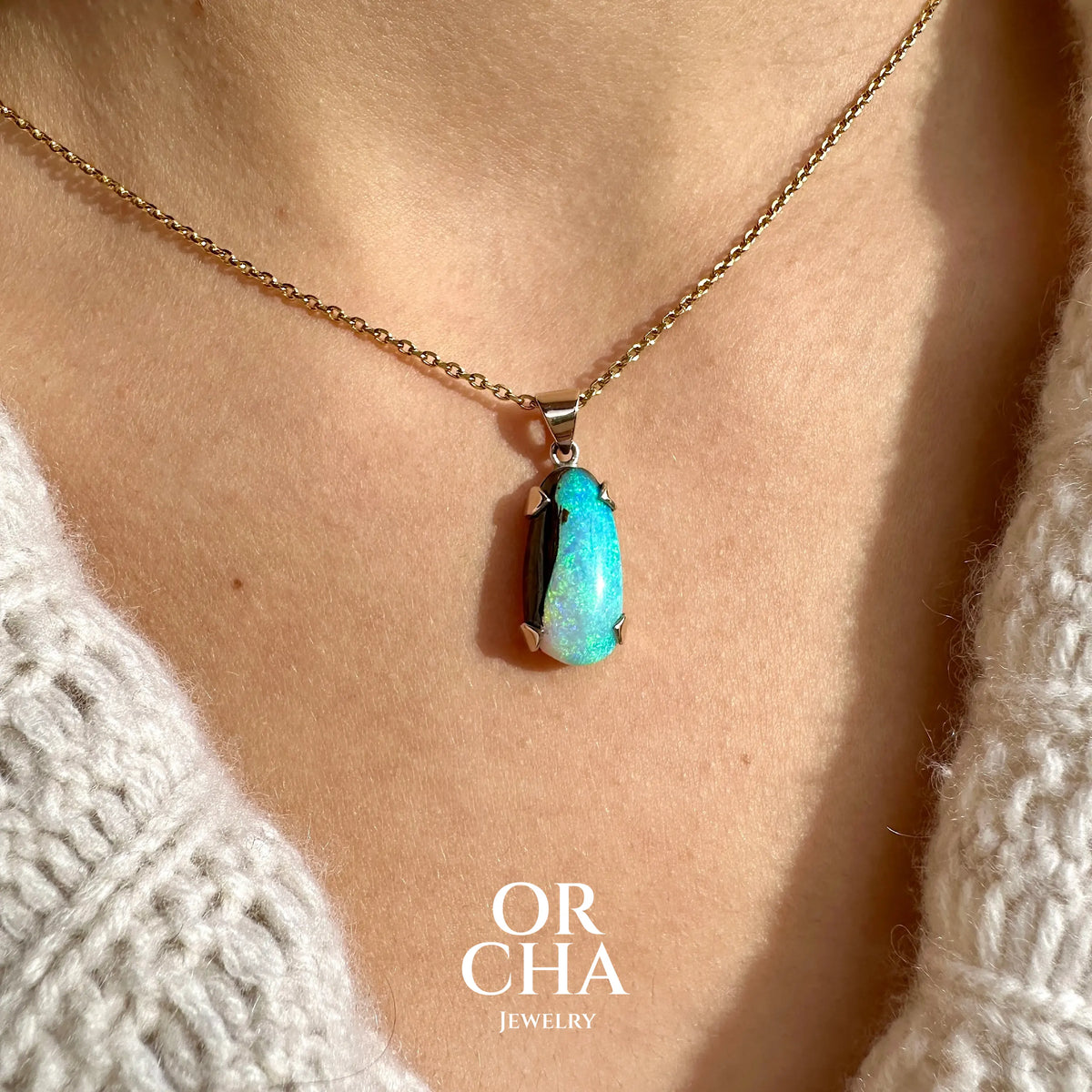
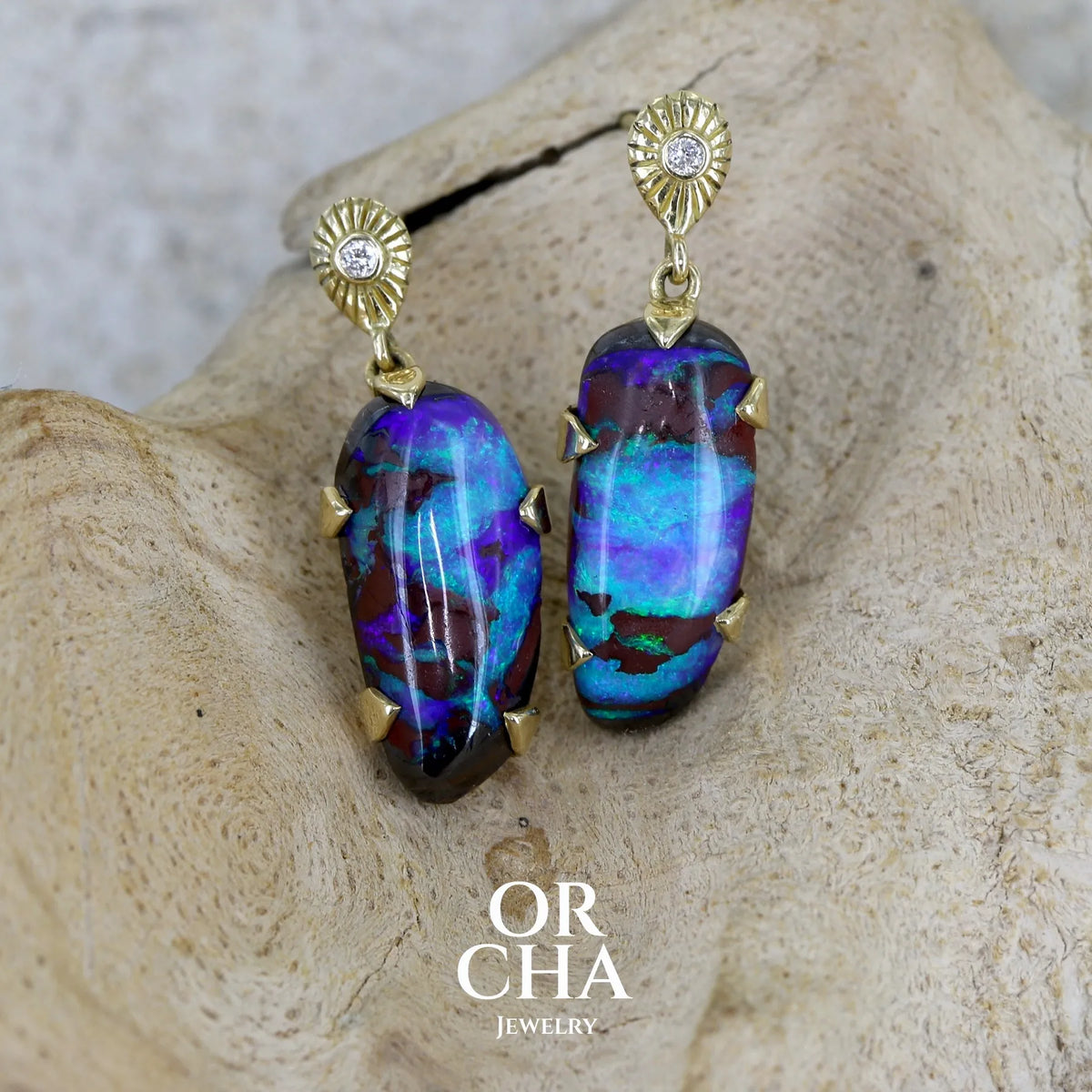
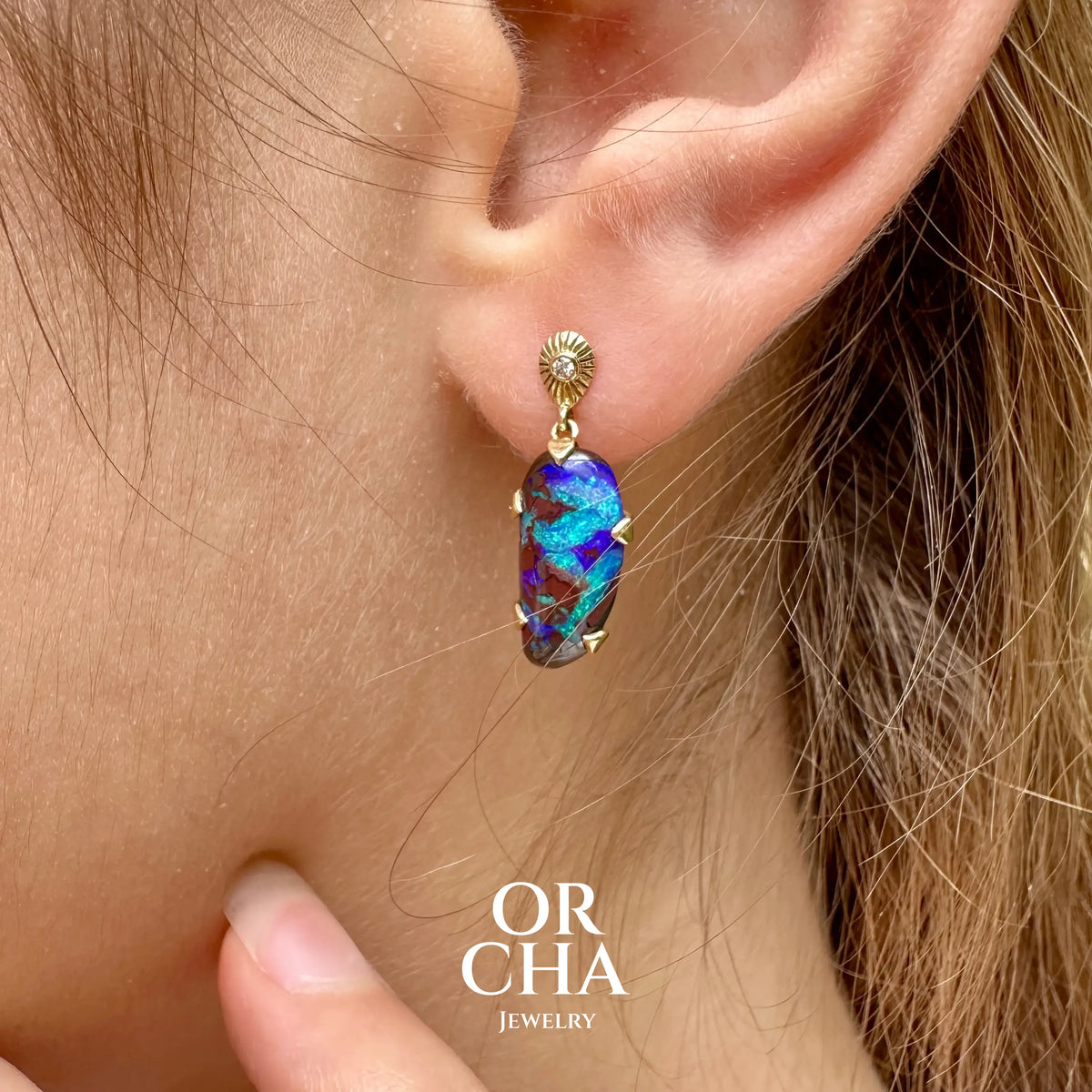
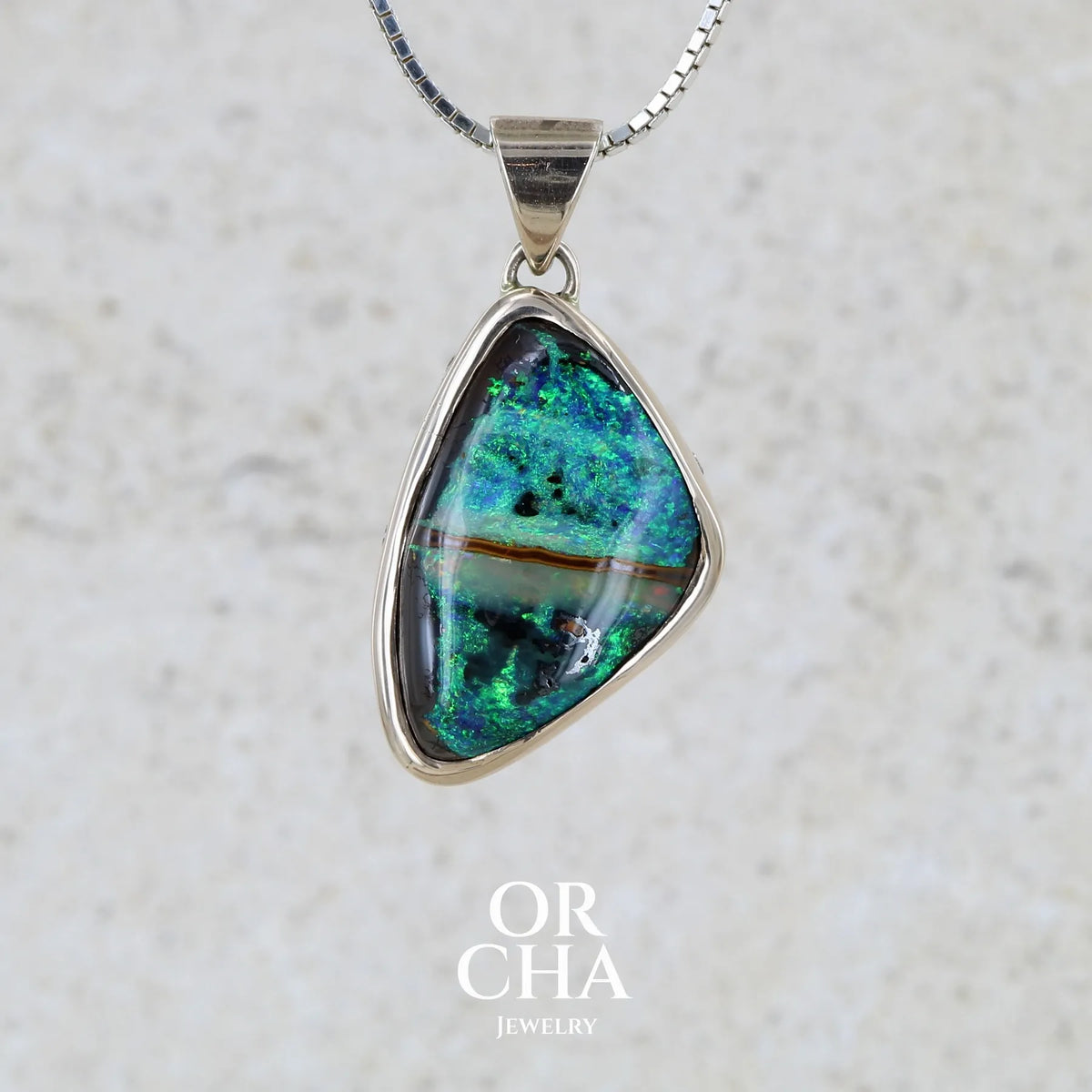
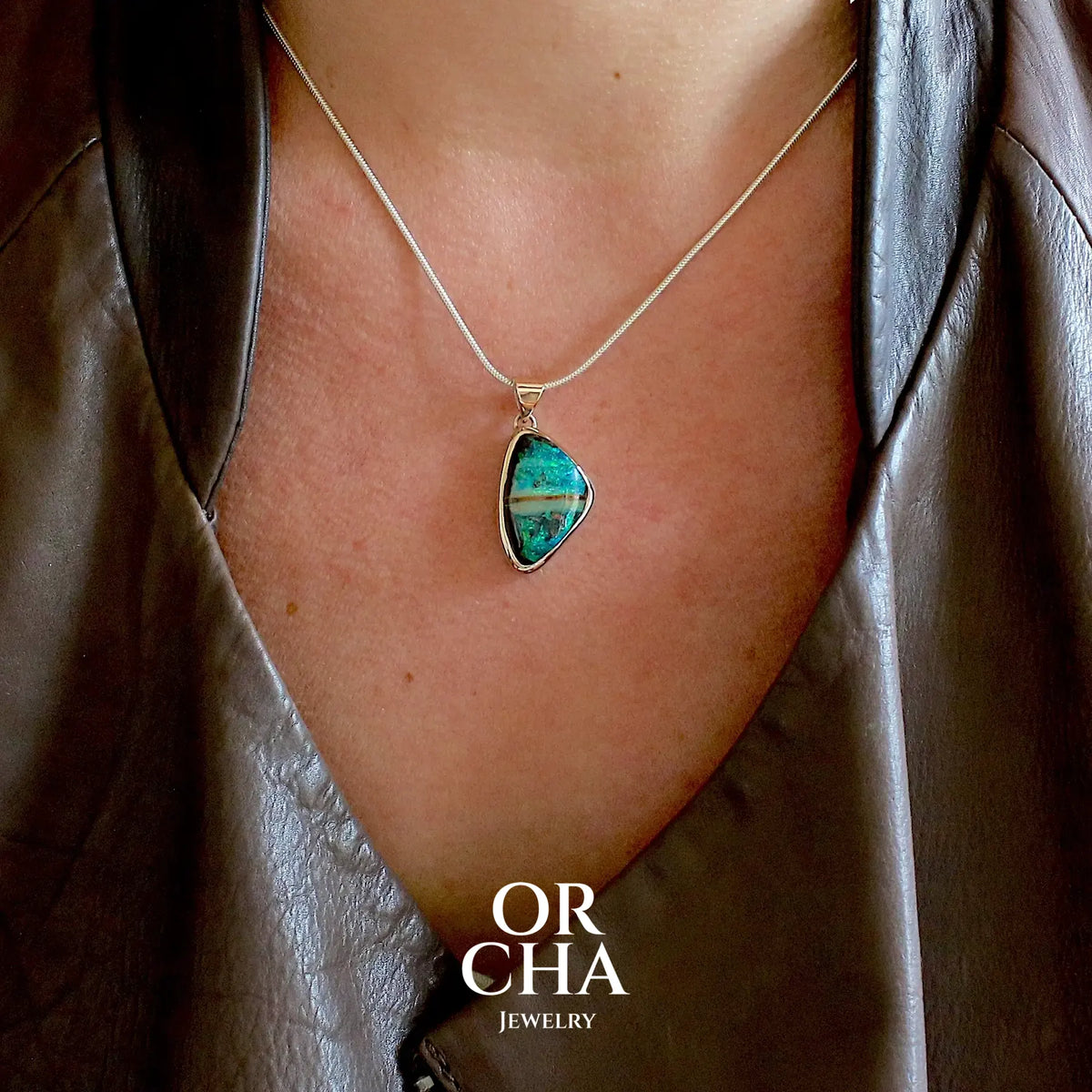
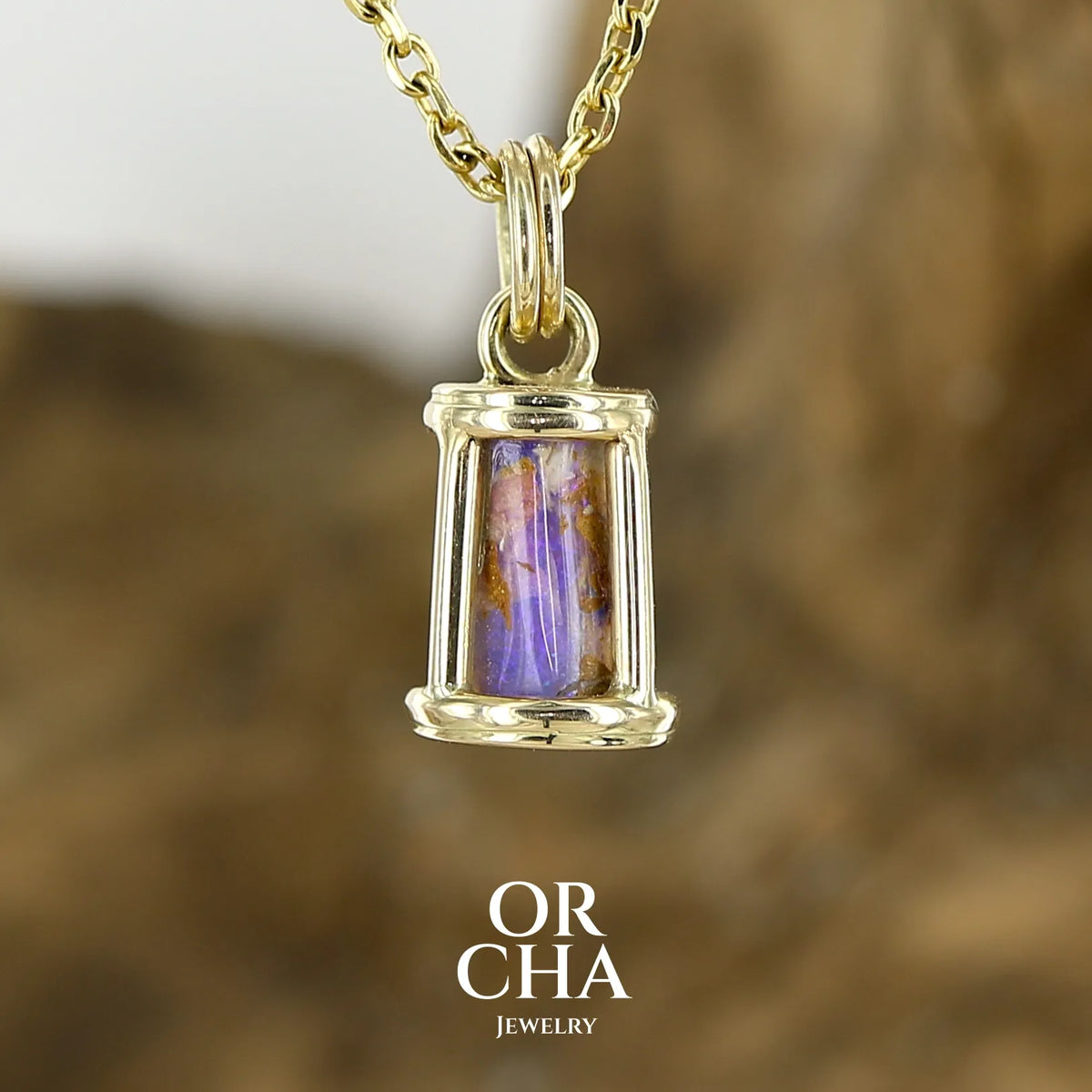
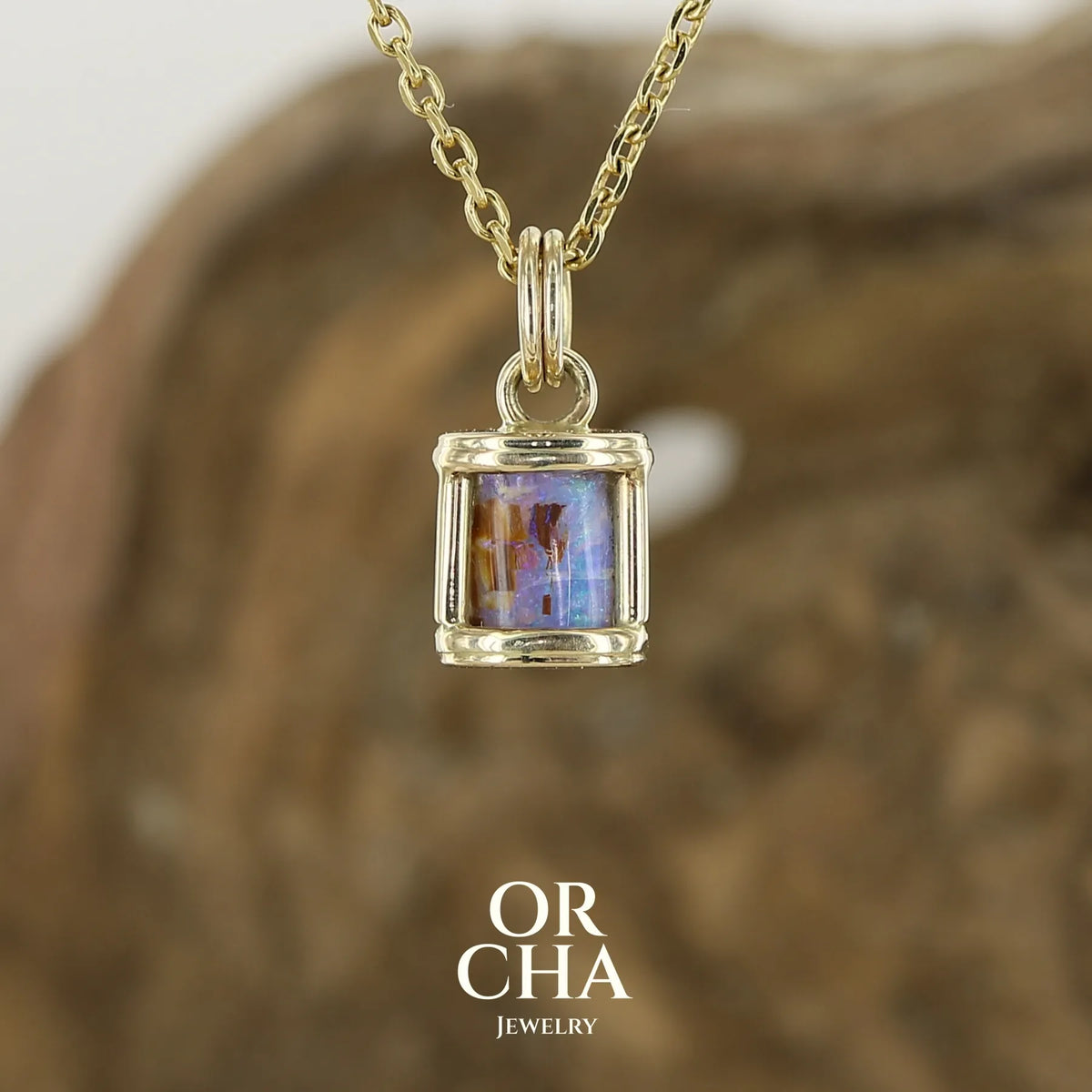
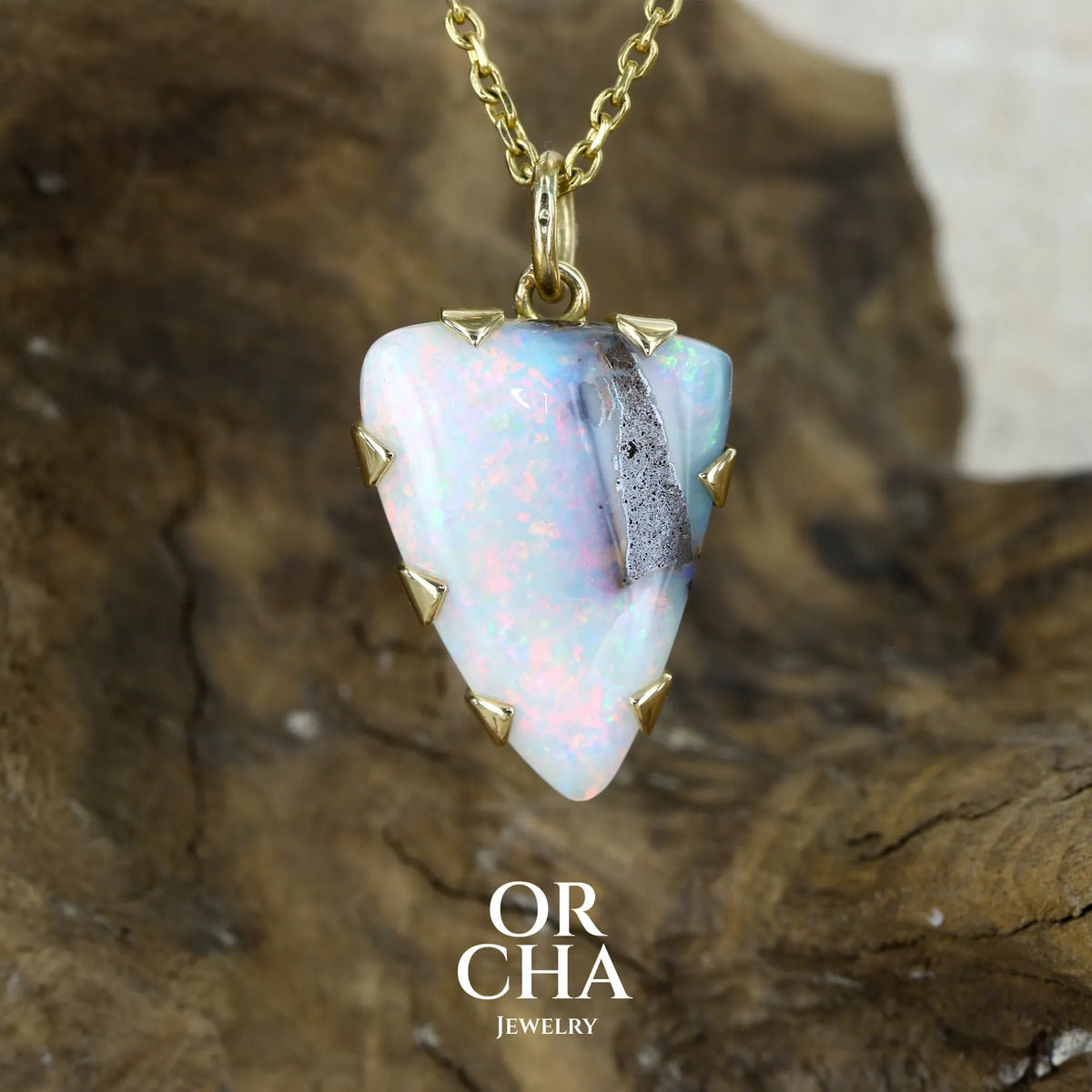
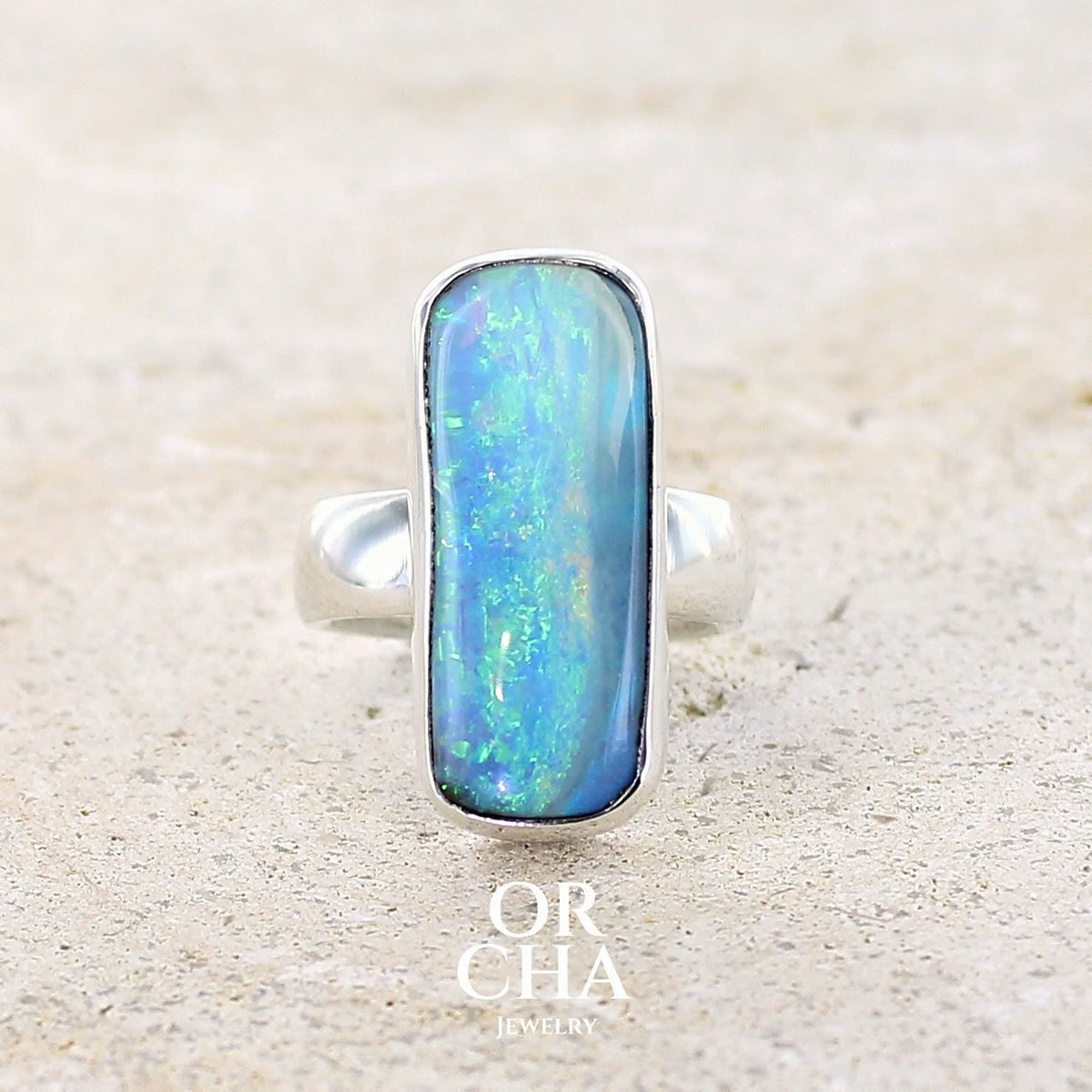
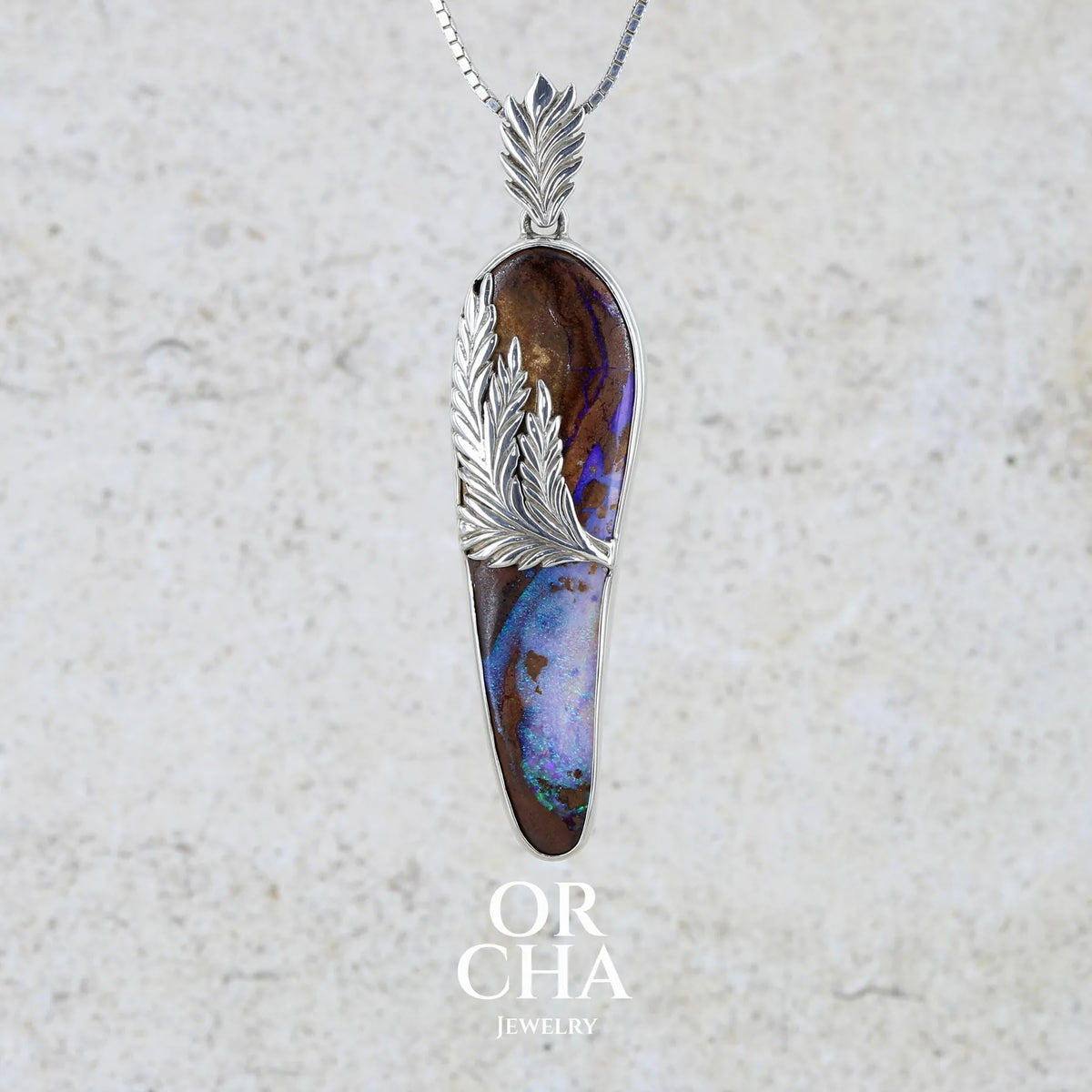
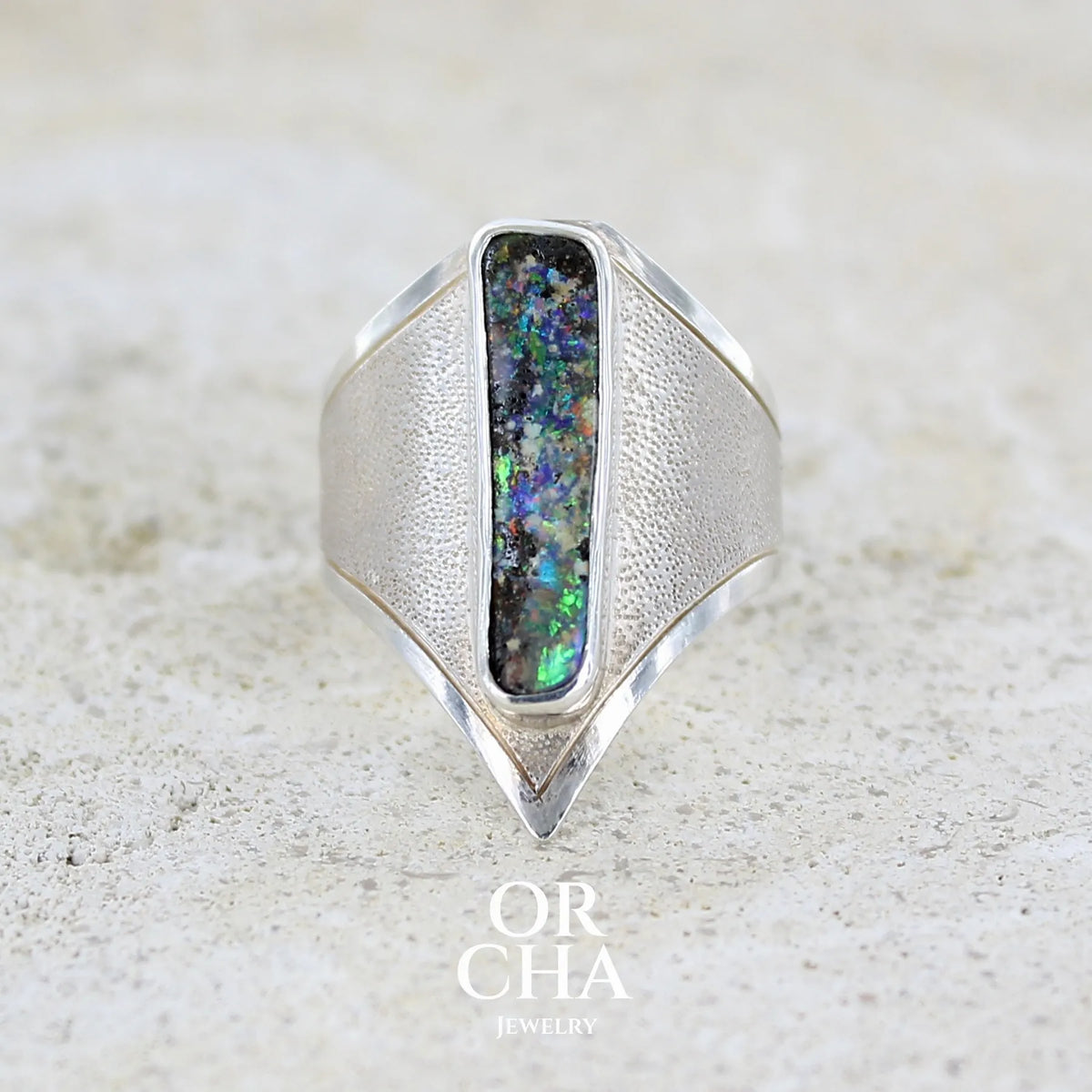
Boulder Opal is our favorite. It is a fragment of ironstone from Queensland in which veins of opal have formed, sometimes as thin as a thread, sometimes wide and generous. Each Boulder is absolutely unique: the brown matrix surrounding it is part of the stone, giving it a wild and organic character that no cut could ever reproduce. It is the only opal that can be confidently set in jewelry without worrying about the fragility of a stone that is too thin.
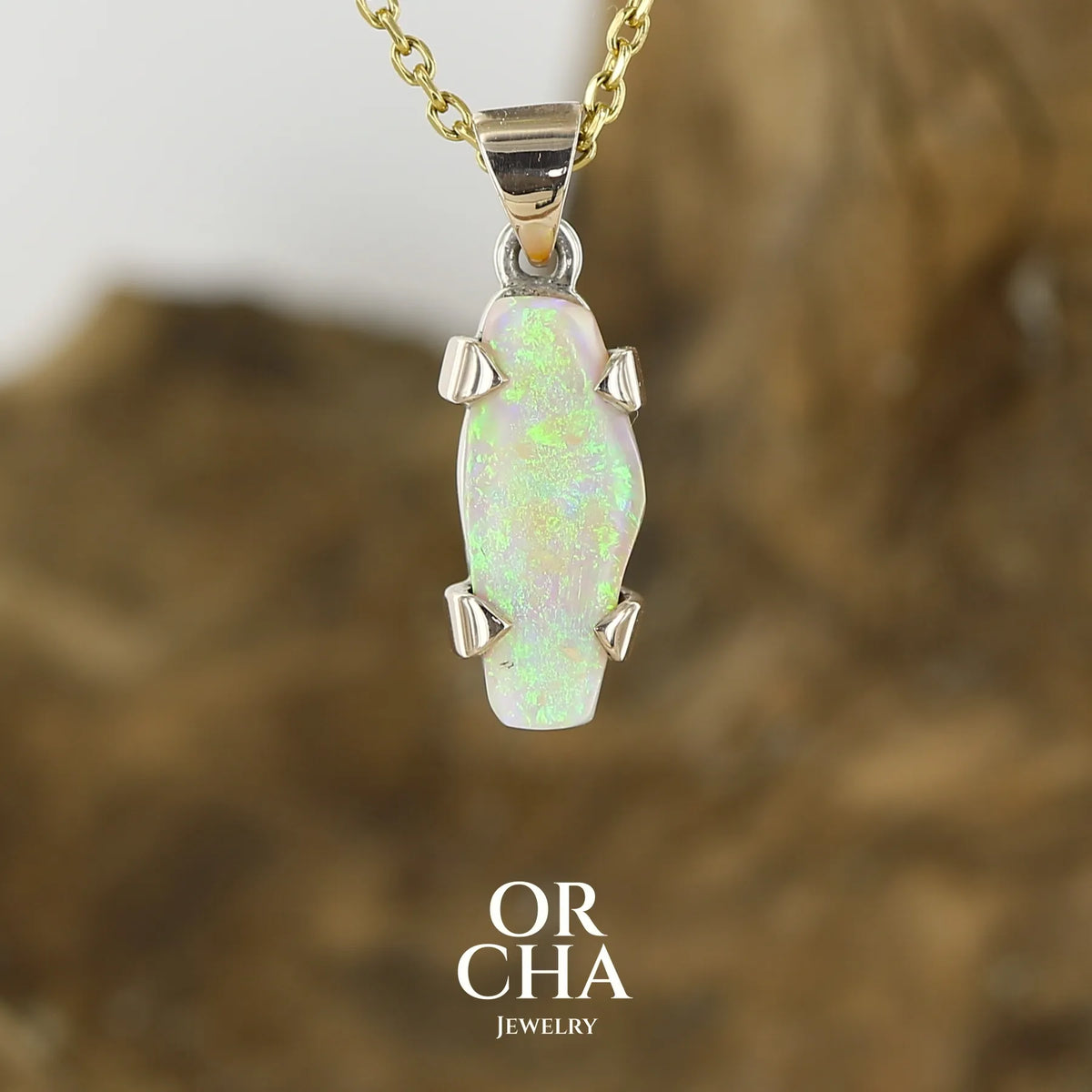
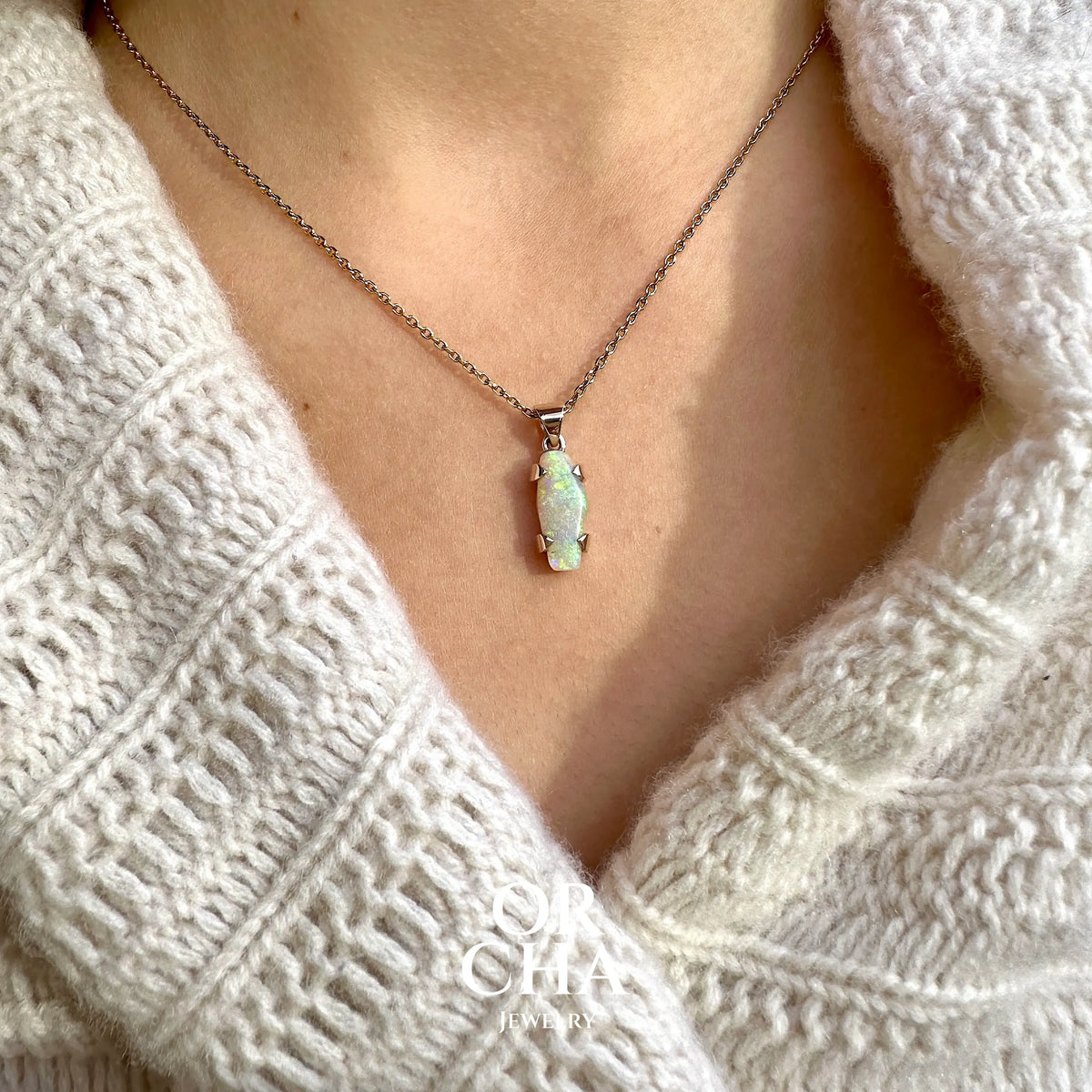
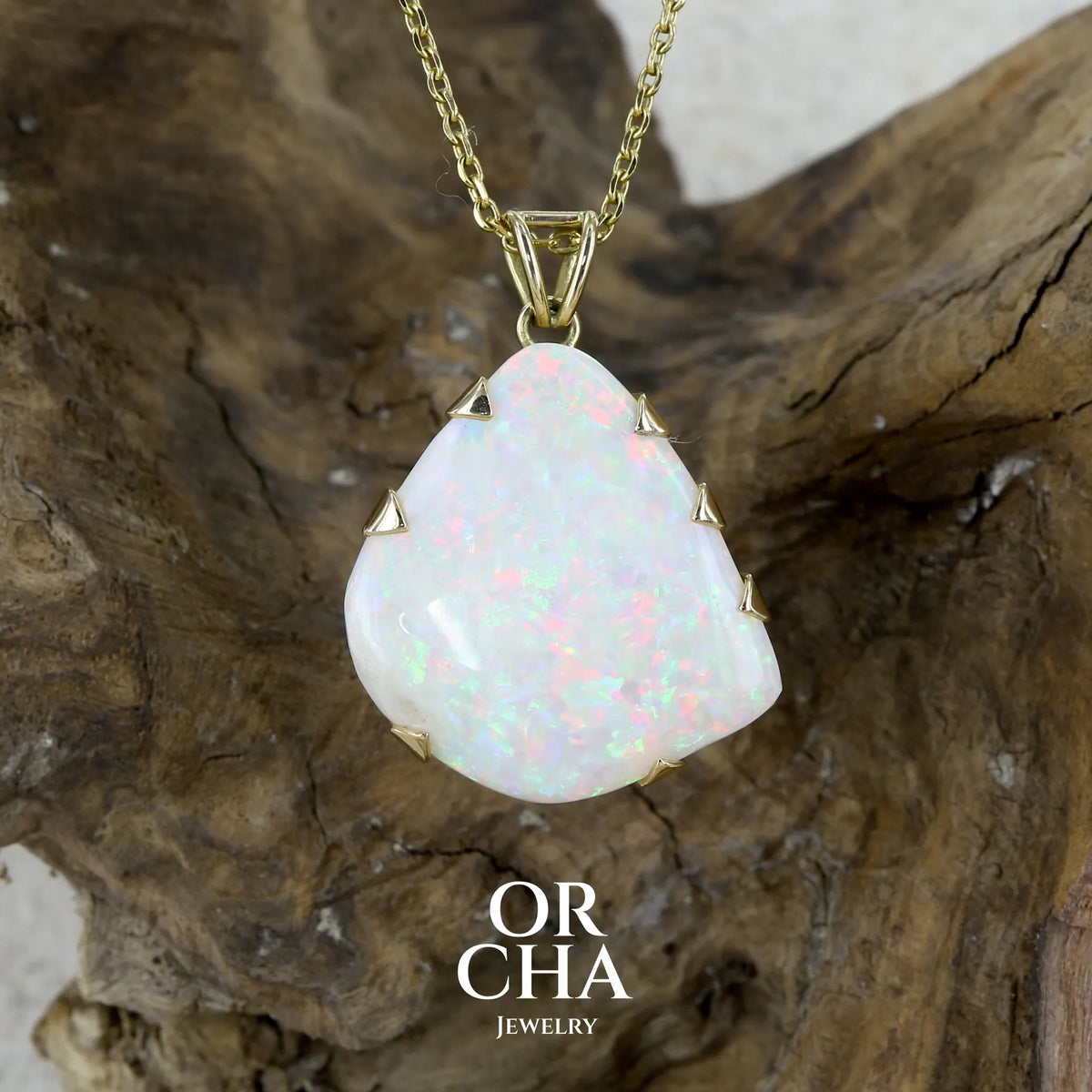
White Opal from Coober Pedy is the classic opal, the one jewelers have dreamed of for centuries. On its milky, translucent background, the colored fire seems to float within the material. When it ignites the entire surface — green, blue, orange, red — it is called a "full fire" opal, the most sought-after.
We do not offer Ethiopian Welo Opal. Although visually spectacular, this variety is hydrophane: it absorbs water and can yellow or lose its iridescence over time. Transparency is part of our approach — you deserve to know exactly what you are wearing.
A Stone That Carries the Rainbow — Myths and Symbolism
Opal has always fascinated as much as it has frightened. In ancient India, a legend tells that the goddess of the rainbow transformed herself into an opal to escape her suitors — imprisoning all the colors of the sky in the stone forever. For the Aboriginal people of Australia, the creator god is said to have descended to Earth by walking on a rainbow, coloring the ground with each of his steps. According to Arabic tradition, opal is born from the light of lightning captured in rock.
As for its reputation as an unlucky stone — born in the 19th century from a Walter Scott novel and the clumsiness of lapidaries who broke these delicate gems — it has no gemmological basis. On the contrary, Opal is considered in many traditions to be the stone of change, inspiration, and inner clarity: the one that guides you when you are seeking your path.
Caring for Your Opal
Opal is a living stone, in the most literal sense: it contains water, between 3 and 21% of its mass depending on the specimen. It is this water that contributes to its brilliance, and it is what requires a few simple precautions. Avoid prolonged exposure to heat or direct sunlight, which can dry out the stone and, over time, cause fine cracks. Keep it away from cosmetics, chlorine, and salt water. Store it away from impacts — Opal is soft (5.5 to 6.5 on the Mohs scale) and cannot withstand scratches. With these precautions, it will accompany you for decades, retaining the full intensity of its fire.
Opal Jewelry at Orcha Jewelry
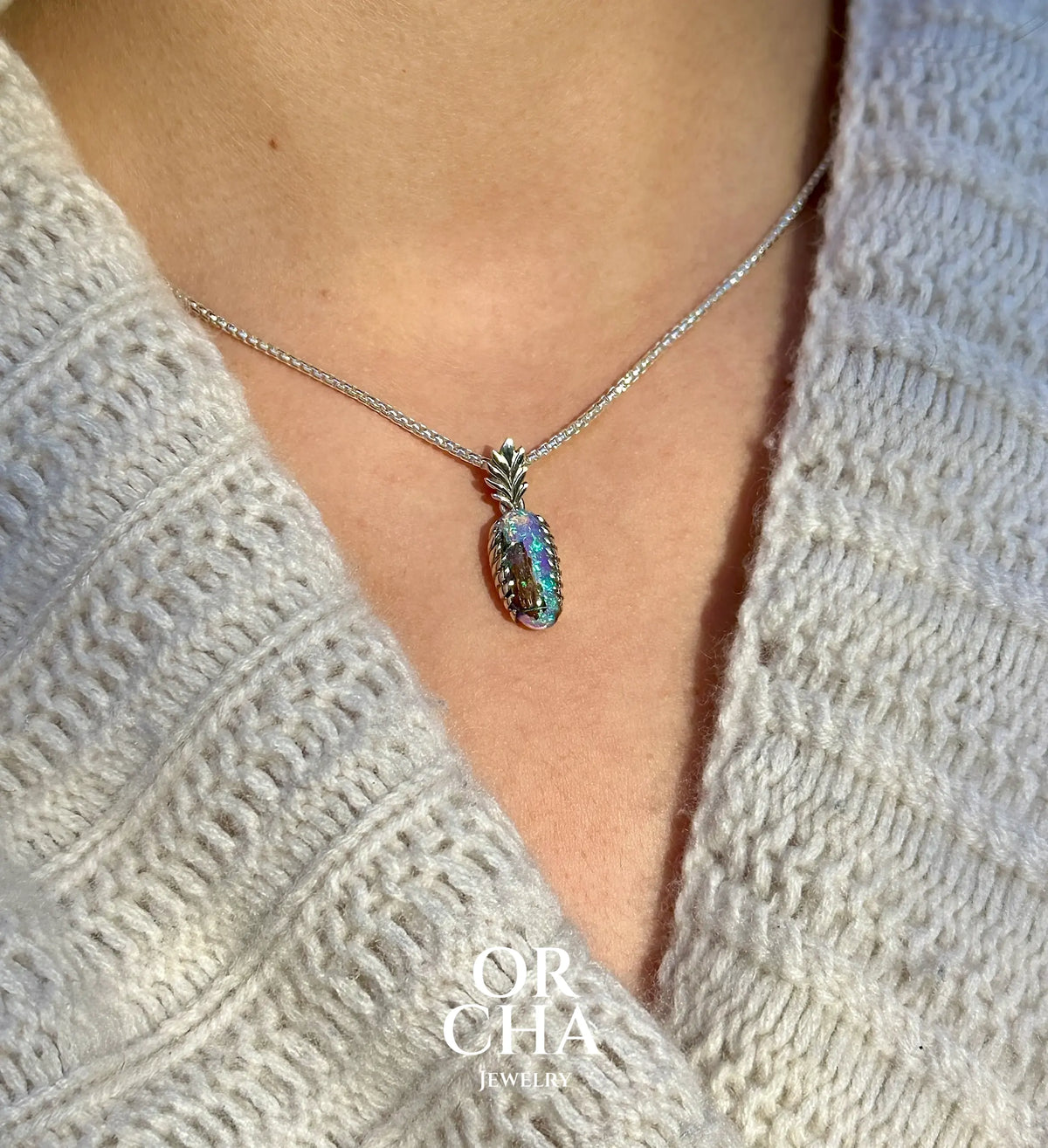
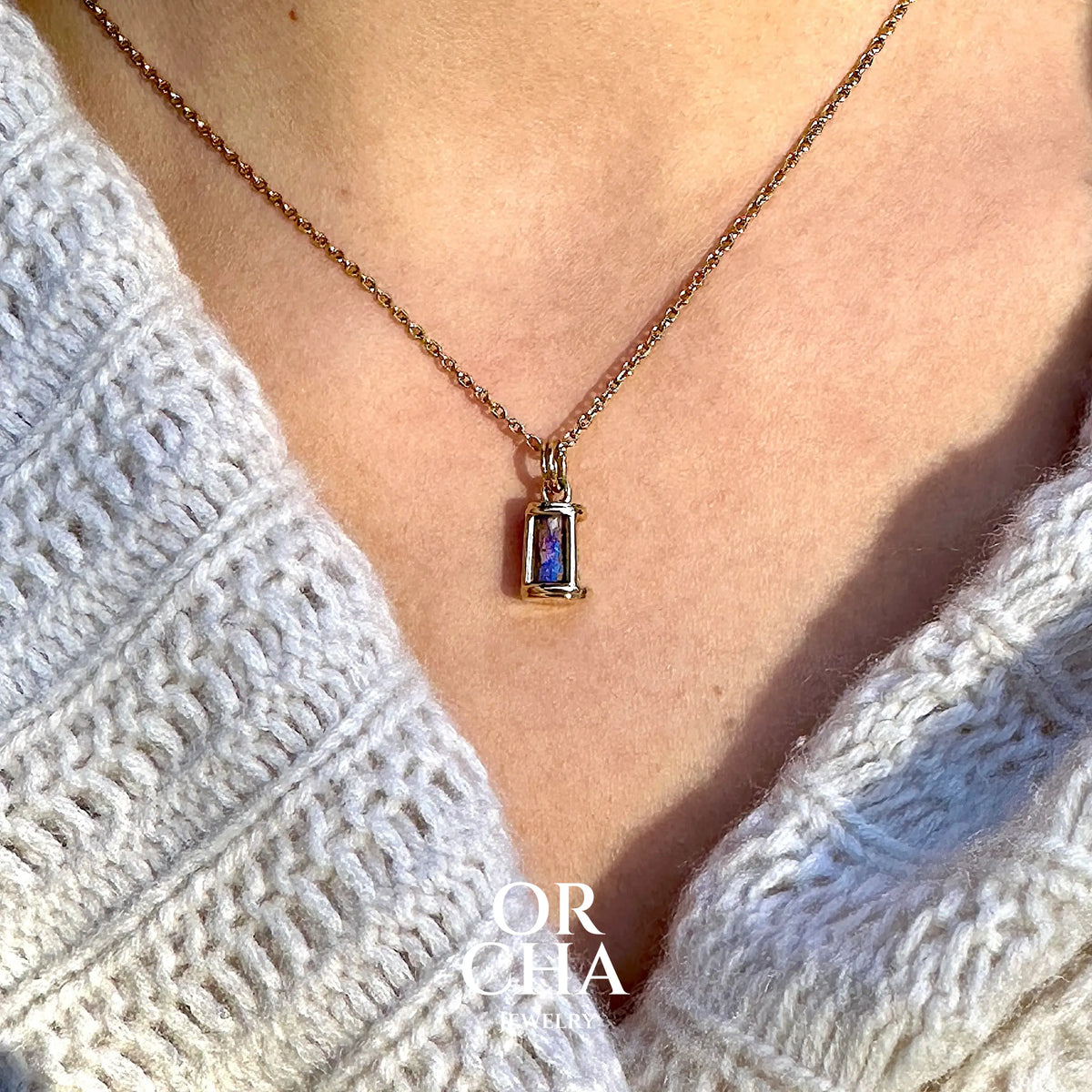
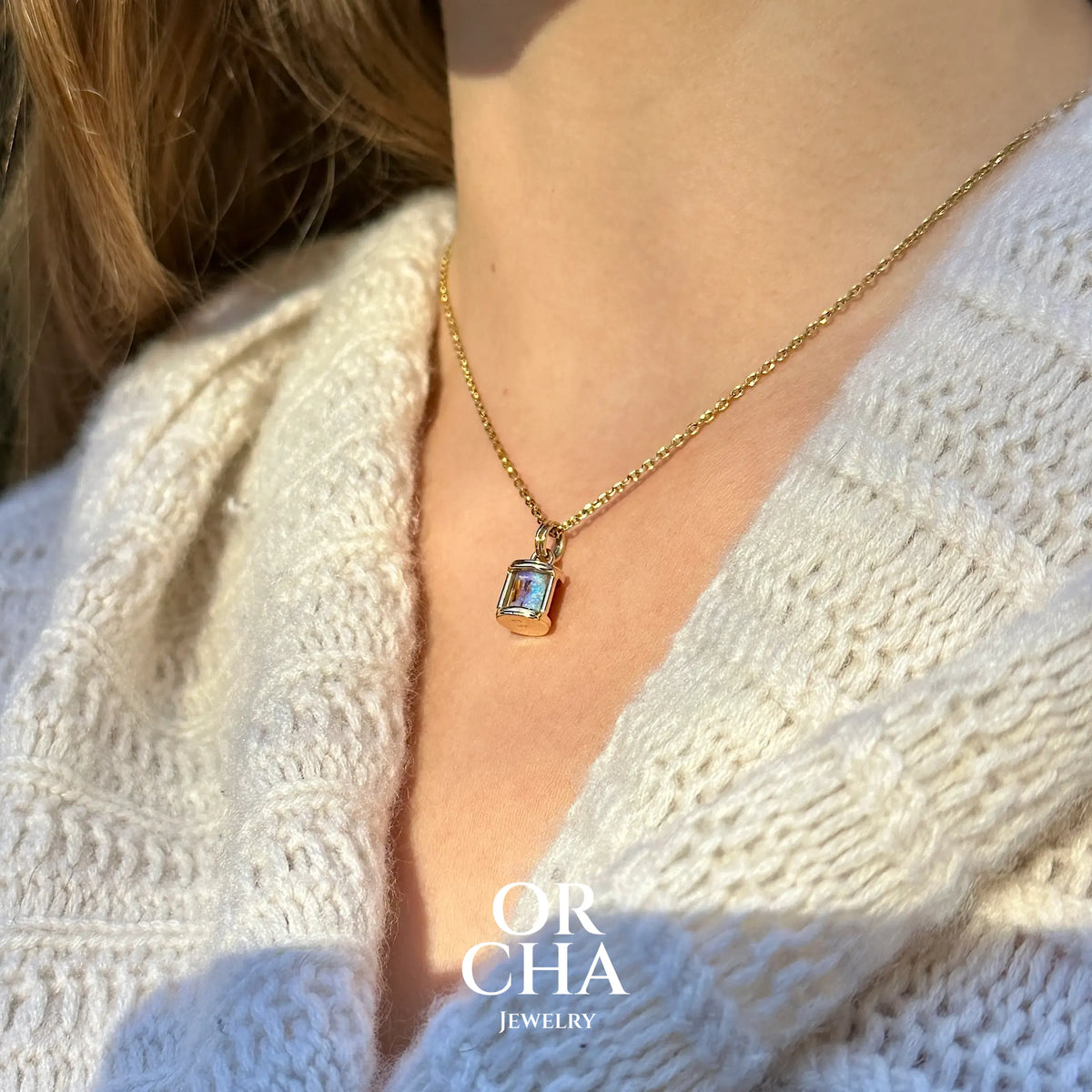
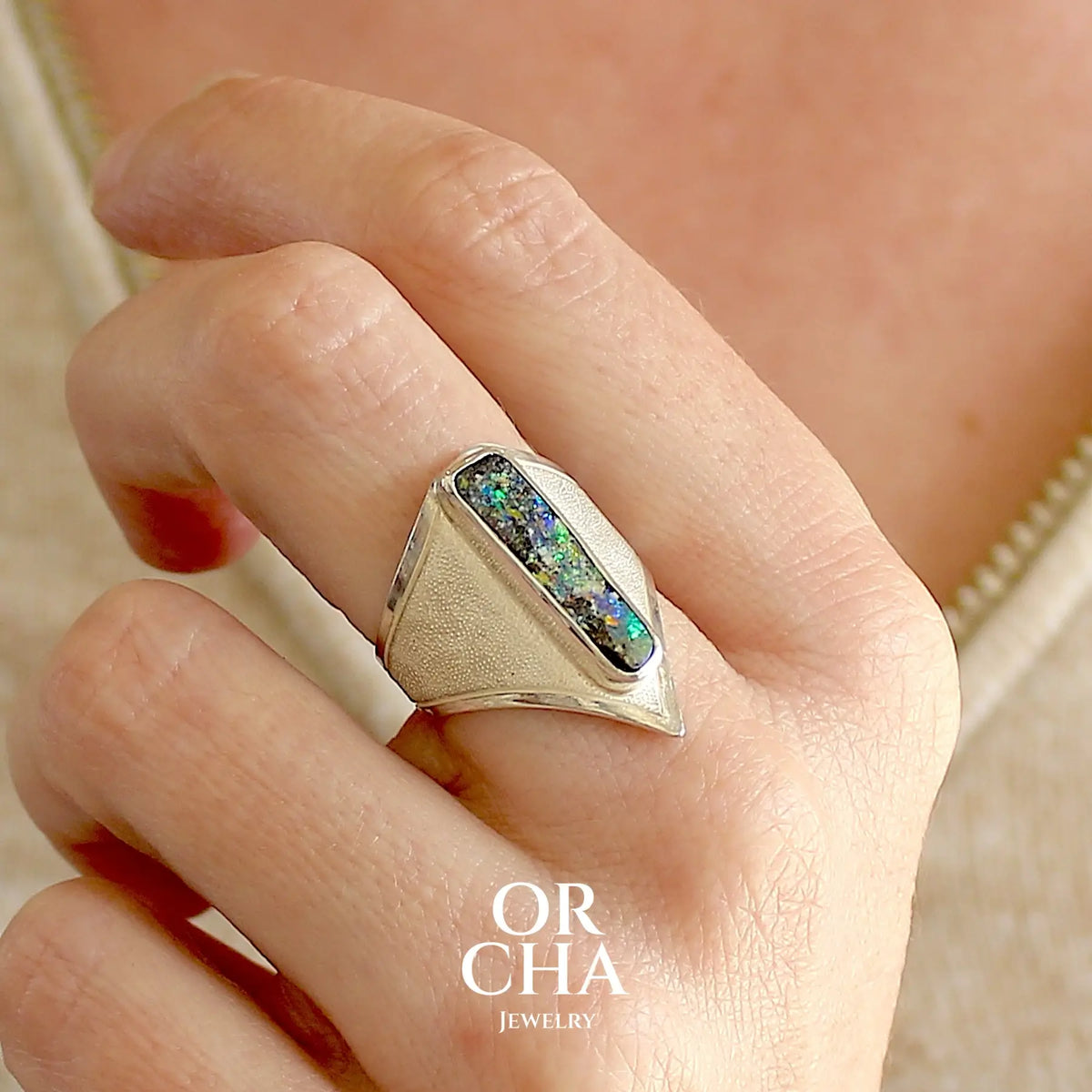
Our Opal pieces are rare and treated as such. Each opal we select is chosen by hand for the quality and intensity of its fire — no two stones are identical. They are set in 925 sterling silver or 18k yellow gold by artisan jewelers whose work we have known for years. To learn more about how we select stones and artisans, visit our Artisans & Sourcing page. Have questions about caring for your Opal or the differences between varieties? Our Stone & Gemstone FAQ answers you in detail.
To understand the play of color, demystify the reputation of bad luck, and choose your opal with full knowledge, read our article on opal.